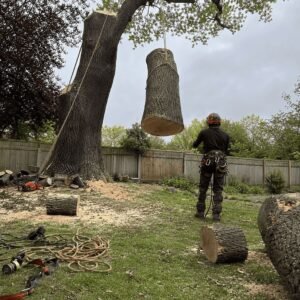
Would we always talk you out of felling a tree?
No, we would not always talk you out of felling a tree. We will question it when pruning, crown work, monitoring or replacement planting would solve the real problem with less loss, less disruption and a better fit for your garden. If removal is the right answer, we will say so plainly.
Felling should be a decision, not the first reaction to an overgrown tree. Most people ask us about removal because the tree feels too big, blocks light, drops leaves, worries a neighbour, or has shed branches after high winds.
Our first question is simple: what do you need the tree to stop doing? Once that is clear, the answer is easier. You might need tree pruning, crown reduction, crown thinning, crown lifting, or a short period of monitoring. You might need tree felling and removal. The point is to choose the work that fixes the problem without doing more than the garden needs.
Can pruning solve the problem without felling?
Pruning is not one single job. A good cut changes a specific thing, such as height, light, clearance or shape, so the tree still works in the garden.
At Treescapes, we often start by asking what is actually bothering you. A tree that feels too tall may need crown reduction, which means reducing the size of the canopy in a controlled way. A tree that makes the garden too dark may need crown thinning, which lets more light through the crown. Low branches over a lawn, path or shed may need crown lifting, where selected lower branches are removed for clearance.
| What is bothering you | What we may suggest instead | Why that can work |
|---|---|---|
| The tree feels too tall | Crown reduction | It reduces canopy size without removing the whole tree |
| The garden is too dark | Crown thinning | It lets more light through without stripping the tree |
| Branches are too low | Crown lifting | It improves access under the tree |
| The tree looks untidy | Careful tree pruning | It improves shape and removes poor growth |
| The tree has outgrown the space | Replacement tree planting | A better-suited tree may fit the garden for longer |
The RHS gives the same broad steer: reducing tree size is usually done through pruning, and replacing a tree with one that suits the space can be a better answer where the tree has outgrown the garden.
Casual topping is a different matter. Cutting a tree back hard without a proper plan can leave weak regrowth and a poor shape, so we treat pollarding as a specialist option, not a quick fix. Right tree work solves the problem, not just the appearance on the day.
We are a family-run team covering North Hertfordshire and Central Bedfordshire. Ask us for a free quote.
Get a Free QuoteWhat makes felling the right answer?
A tree with storm-damaged limbs over a path, shed or regular access route needs a careful look before anyone decides to keep it. The issue is not the storm on its own, but what the damage has left behind and where the tree stands.
Felling can be the right answer where a tree is unsafe, badly damaged, in a poor position, or no longer suitable for the site. We also look at whether roots, branches or the tree’s size are creating a serious practical problem that pruning will not fix.
Age, lean, hollows and disease signs do not automatically mean removal. GOV.UK is clear that old or diseased trees are not always dangerous, and the risk needs proper consideration. A qualified arborist looks at the condition of the tree, its position, and what could happen if it is left.
Dead trees need the same balanced view. Some dead wood has wildlife value, and the RHS says a dead tree can be left for wildlife after a safety assessment. Where leaving the whole tree standing is not sensible, reducing it to a stump or grinding the stump after removal may form part of the plan.
Felling is not a failure. It is the right choice when the tree’s condition and position make keeping it the poorer answer.
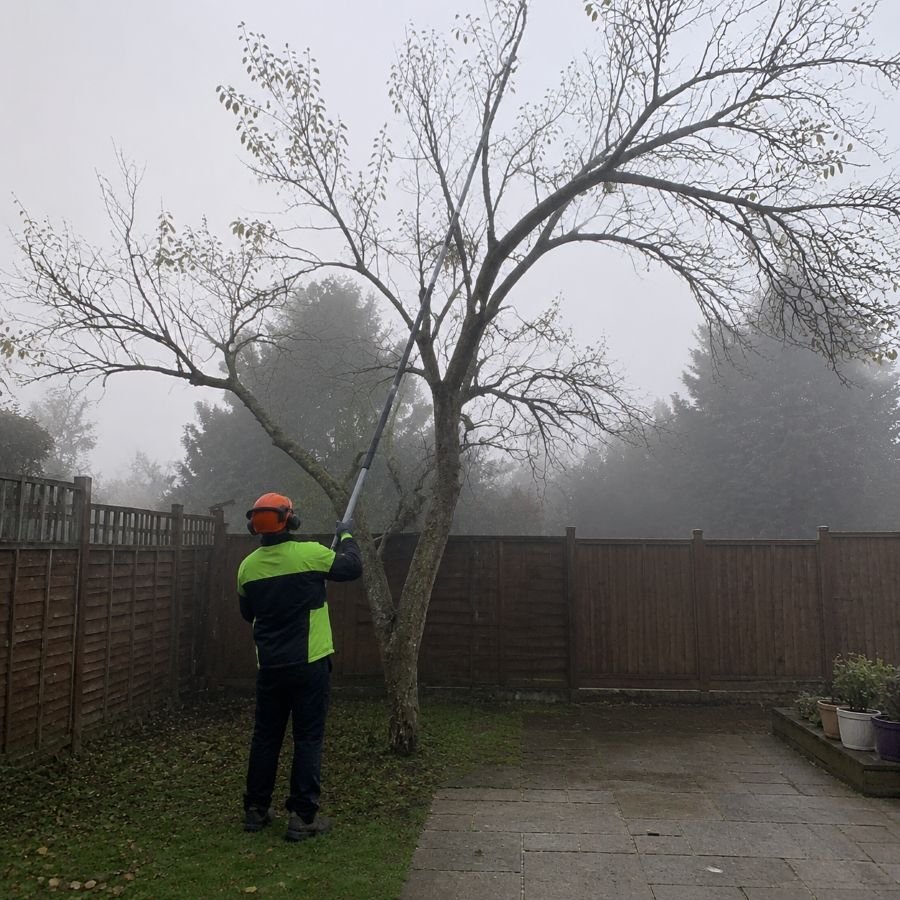
If a tree is only blocking light or feels too large, ask first about crown reduction or crown thinning. Those options often solve the problem while keeping the tree in place.
What checks need handling before tree work starts?
Before any tree work starts, we check the basics: protection, wildlife, access, waste and clean-up. These checks are normal parts of the job, and they stop small issues becoming awkward later.
Based in Lower Stondon near Henlow, we work across North Hertfordshire and Central Bedfordshire, so council checks matter. The rules depend on your council, especially for conservation areas and protected trees. A Tree Preservation Order, often shortened to TPO, usually means you need council consent before work. In a conservation area, a Section 211 notice is the formal notice used for certain tree works.
GOV.UK lists garden trees as an exception from the usual Forestry Commission felling licence rules, but that does not clear every job. Other controls can still apply, including a TPO, conservation area status, planning conditions, or wildlife law. The Planning Portal and local planning authority records can help confirm what applies.
Wildlife checks need plain care too. Nesting birds are protected under the Wildlife and Countryside Act 1981, and the RSPB advises that maintenance work is best done in autumn and winter where possible, with checks before work during nesting season.
Access and clear-up also affect the work. A tree beside a fence, close to a shed, or over a neighbour boundary needs planning before any cutting starts. Waste removal should be clear as well, so you know whether branches, logs and green waste are being taken away and the garden is being left tidy.
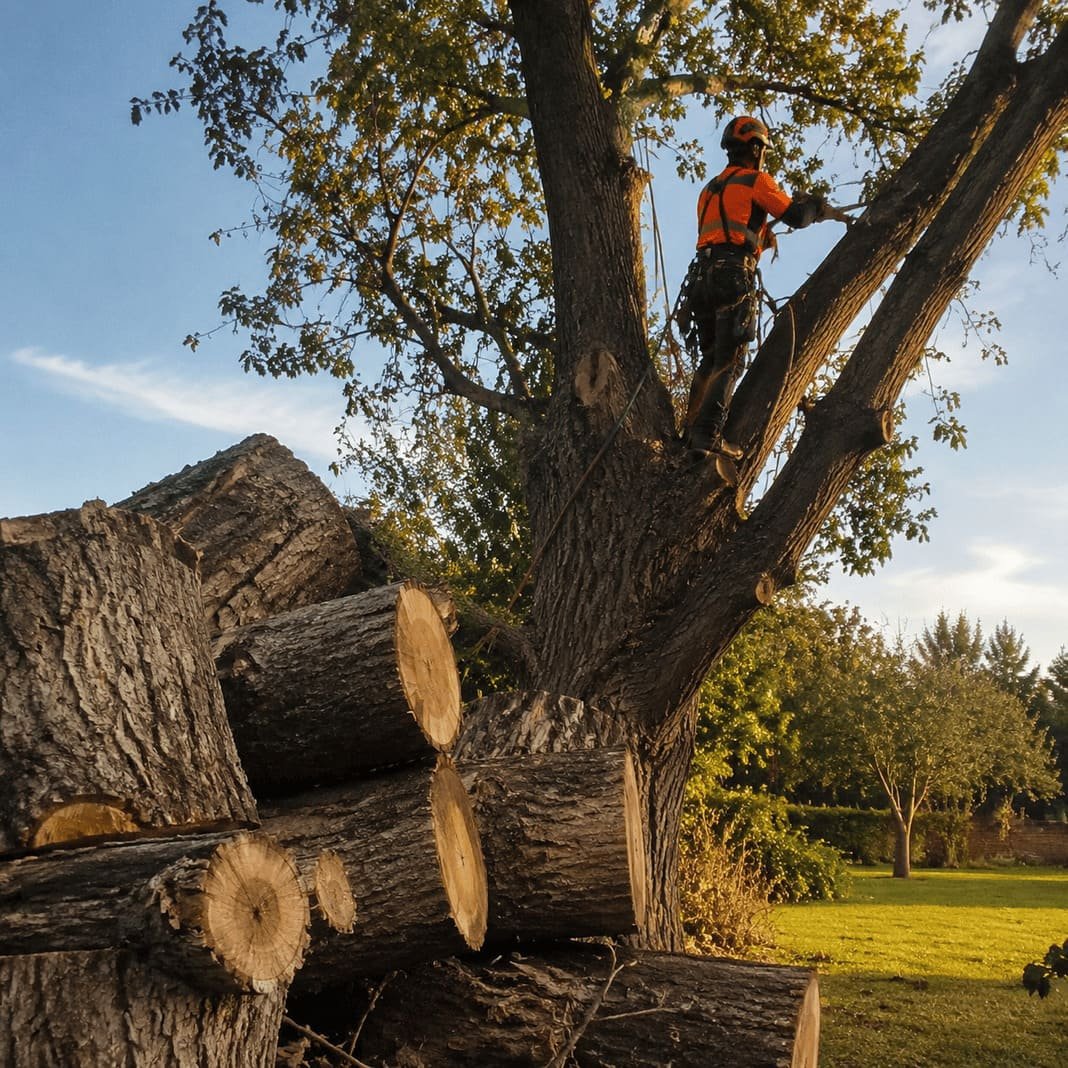
If you are planning replanting or turfing after removal, think about stump grinding at the same time. It makes the space easier to use and avoids leaving an awkward stump behind.
What should matter more than felling or keeping the tree?
A tree can be worth keeping and still need work. It can also be attractive, familiar, or useful for screening, yet still be wrong for the place it stands in. That is why the decision should start with the problem in the garden, then move to the least drastic work that deals with it properly.
At Treescapes, we would rather explain the right option clearly than push felling where pruning would do the job. Sometimes that means a lighter crown, a lower crown, more clearance, stump grinding after removal, or a new tree that fits the space better. Honest tree surgeon advice includes saying when a smaller job is enough.
Prioritise the assessment, because a tree judged from ground level as simply “too big” can lead you to the biggest job, when the right intervention may be smaller, safer and better for the garden.
Tell us what you need and we will give you a free, no-obligation quote, usually within 24 hours.
Request a QuoteQuestions we get asked about felling garden trees
Can I cut down a tree on my own land?
You may still need checks before cutting down a tree on your own land. A Tree Preservation Order, conservation area status, planning condition or wildlife issue can affect what is allowed.
Can a tree be reduced in height without killing it?
Yes, many trees can be reduced in height through crown reduction if the work is planned and cut properly. The right answer depends on the tree species, its condition and how much reduction is sensible.
Is crown thinning the same as reducing a tree?
No, crown thinning lets more light pass through the crown by removing selected growth, while crown reduction reduces the overall size of the canopy. The right choice depends on whether the problem is shade, scale or clearance.
Can a dead tree be left standing for wildlife?
A dead tree can sometimes be left standing for wildlife if it is safe in that position. If the tree could fall into a used area, a safer option may be reducing it to a stump or removing it.
Will stump grinding be needed after felling?
Stump grinding is useful when you want the area levelled for replanting, turfing or easier garden use. Some stumps can be left, but that depends on where they are and what you want to do with the space.
This is general information, not professional advice.