
Can you carry out tree work in a conservation area?
You can often prune, reduce, lift, thin or remove a tree in a conservation area, but you must check its protection first. In many cases, we need to notify the council before work starts. The safest route is simple: check the status, describe the work, then cut only what was notified or consented.
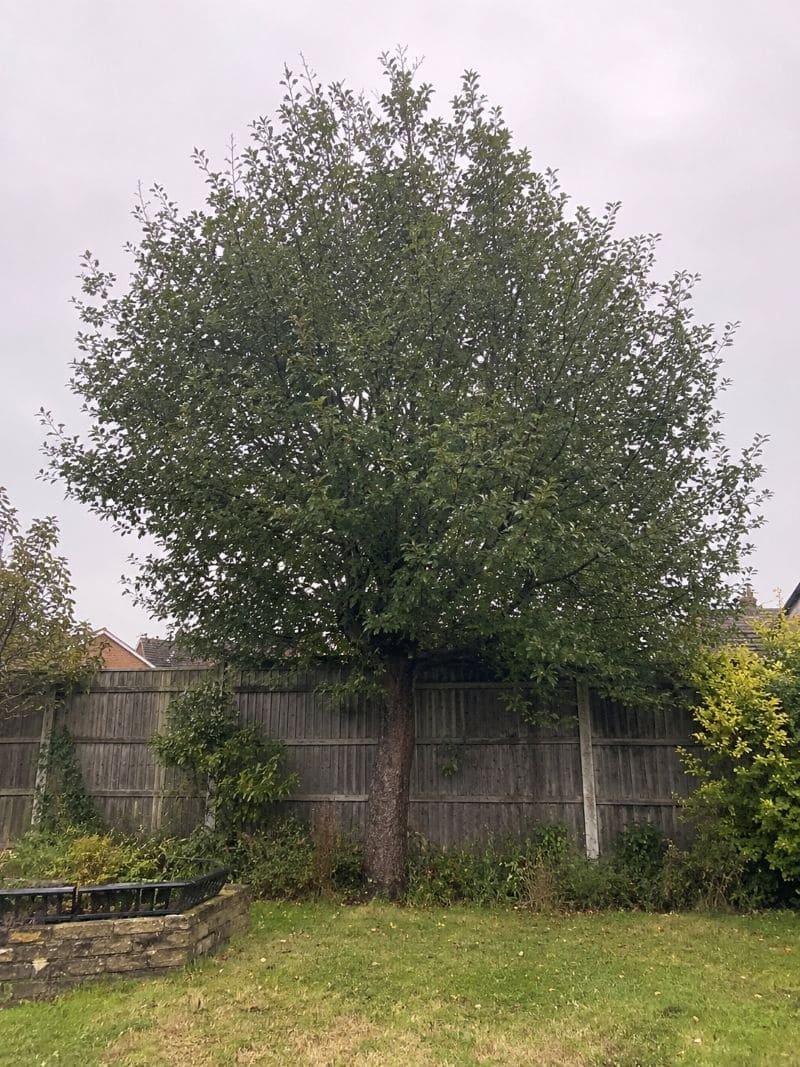
Check before you cut, because notice often comes first
A tree can look like any other garden tree and still need a council check before anyone cuts it. That applies to common jobs such as pruning overgrown branches, lifting a crown over a path, reducing a tree that has outgrown a small garden, or removing deadwood.
In England, GOV.UK guidance says trees in a conservation area that are not already covered by a Tree Preservation Order are protected under Section 211 of the Town and Country Planning Act 1990. In plain English, a Section 211 notice tells your Local Planning Authority, which is your council for planning matters, that you plan to carry out tree work. The standard notice period is six weeks unless an exception applies.
North Hertfordshire and Central Bedfordshire sit under different councils, so the first check depends on where the tree stands. A garden in Baldock does not go through the same local authority as one in Henlow or Shefford. The rule to keep in mind is simple: do not guess based on a neighbour’s job, an old planning search, or what happened in another village.
Conservation area tree rules do not mean no tree work is allowed. They mean the work needs to be checked and described before it starts, especially where pruning, crown reduction, crown lifting, crown thinning or felling is involved.
We are a family-run team covering North Hertfordshire and Central Bedfordshire. Ask us for a free quote.
Get a Free QuoteSeparate conservation area notice from TPO consent
A conservation area notice and Tree Preservation Order consent are different routes. Mixing them up is one of the easiest ways to delay a simple tree pruning job.
| Conservation area tree | TPO tree |
|---|---|
| A Section 211 notice tells the council about proposed work to a tree in a conservation area. | A Tree Preservation Order, often shortened to TPO, protects a specific tree, group of trees or woodland. |
| The council cannot grant consent with conditions through the Section 211 notice route because it is not a consent application. | TPO tree work normally needs consent before pruning or felling. |
| The council can allow the notice period to pass, say the work can go ahead, or make a TPO. | The council considers the proposed work as an application for consent. |
Some trees sit in both categories. A tree can be inside a conservation area and also have its own TPO, so we check both before planning the work. North Herts Council says trees protected by a TPO need consent for pruning and felling work, and Central Bedfordshire Council also notes that some conservation area trees may have a TPO.
That is why the right question is whether your garden is in a conservation area. We also need to know whether the individual tree has its own order.
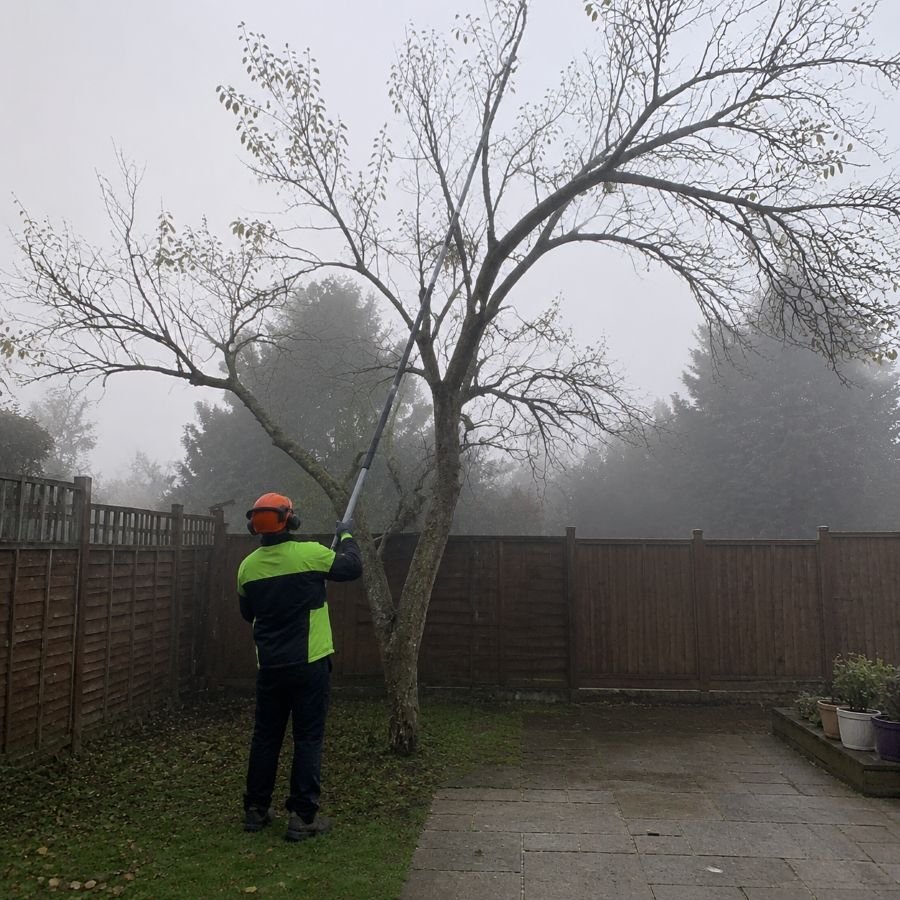
Keep your notice wording specific. Say exactly whether the job is crown lifting, crown reduction, thinning or deadwood removal, because vague terms can slow the council response.

Follow the notice route in the right order
Suppose you want to reduce a tree that overhangs your lawn and blocks a path. The job may be perfectly sensible, but the order of checks still matters.
- Check whether the tree is in a conservation area. Your council records or mapping tools are the usual starting point. For homes across North Hertfordshire and Central Bedfordshire, the correct council matters because each authority manages its own records.
- Check whether the tree has a TPO. A TPO changes the route. If one applies, consent is normally needed before work such as pruning, crown reduction or felling.
- Define the work before you submit anything. “Cut back the tree” is too loose. A better description names the tree and the job, such as crown lifting over a path or reducing the crown by a stated amount if that is what has been assessed.
- Submit the right notice or application. For a conservation area tree without a TPO, that means a Section 211 notice. For a TPO tree, it means a consent application, often submitted through the Planning Portal where the council requires it.
- Wait for the council position. During the six-week Section 211 notice period, the council can make a TPO, tell you the work can go ahead, or let the period end. After that, the notified work can be carried out within two years of the notice date.
- Carry out only the work covered. Work on the day should match the notice or consent. Extra cutting because the branch “looks in the way” creates a new problem.
At Treescapes, we treat this as part of planning the job, not a side issue. Joe, our qualified arborist, looks at what the tree needs, what protection may apply, and how the proposed work should be worded before cutting is arranged. The wording matters as much as the waiting.
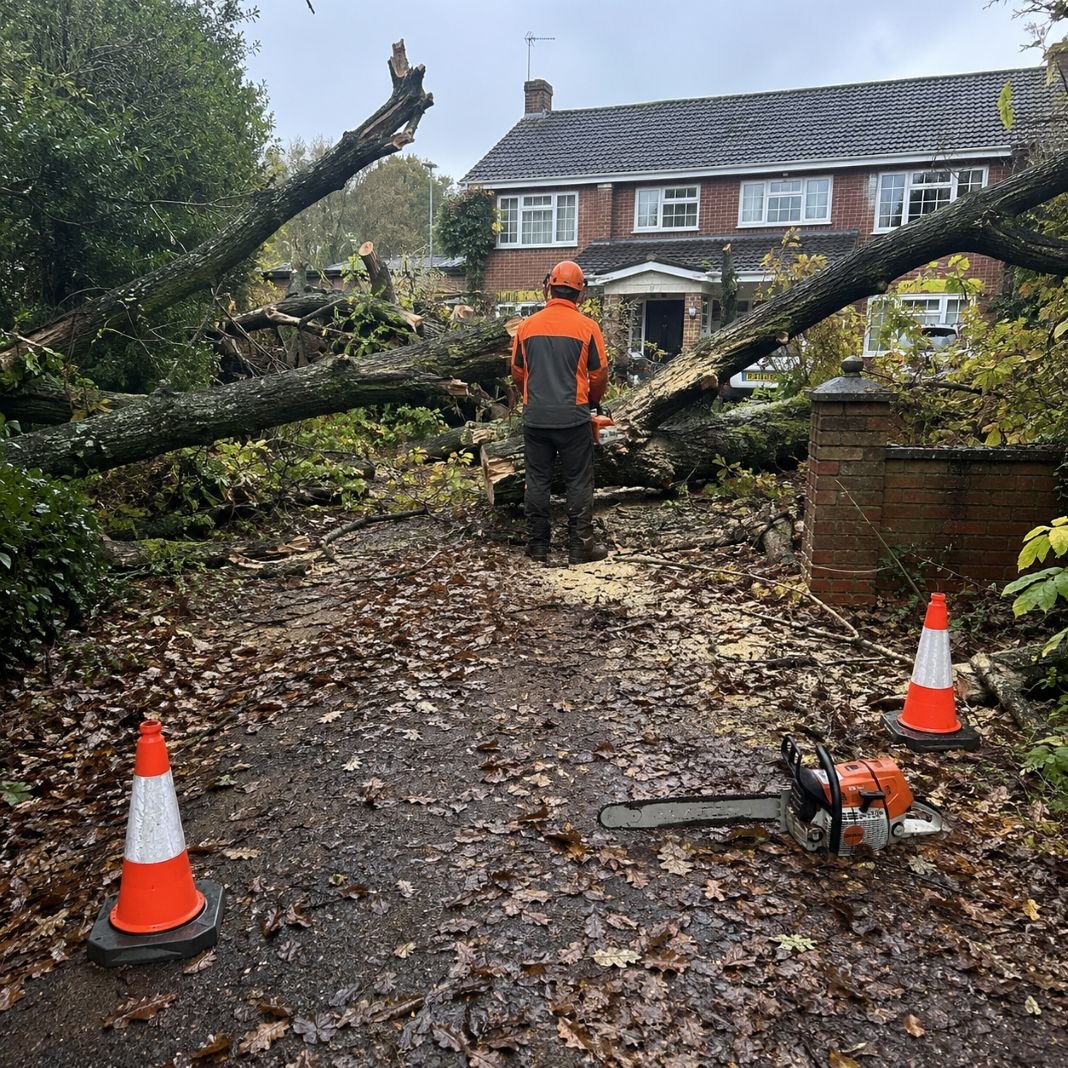
Describe the tree work in exact plain words
“Trim the tree” is vague. “Lift the lower crown over the garden path and remove deadwood from the apple tree at the rear boundary” gives the council and the contractor something clear to work from.
Name the tree clearly
A Section 211 notice needs enough detail to identify the tree or trees. Where more than one tree is involved, the notice should make clear which work applies to which tree. A plan is not always required, but it can help where the garden has several trees or a boundary is awkward.
For a single tree, a clear description might refer to its position in the garden, such as the birch beside the driveway or the cherry tree at the rear fence. The aim is to stop any doubt about which tree the notice covers.
For several trees, vague group wording can cause trouble. If one tree needs crown lifting and another needs deadwood removal, the description should separate those jobs.
Describe the work clearly
Protected tree work is easier to handle when the words match the job. Pruning, crown reduction, crown thinning, crown lifting and deadwood removal are different operations, and they should not be bundled under a loose phrase such as “tidy up”.
A crown reduction usually means reducing the size of the crown in a controlled way. Crown lifting removes selected lower branches or lifts the lower canopy. Crown thinning reduces density within the crown without simply taking height off. Deadwood removal deals with dead branches, which is different from removing a dead tree.
Neighbour overhangs need the same checks. If branches hang across your boundary in a conservation area, we still look at tree protection before any cutting is planned. Treescapes Garden Services is based near Henlow and works across North Hertfordshire and Central Bedfordshire, so we see how easily a simple garden pruning job can cross into council notice territory when the tree sits near a boundary.
Check both the conservation area and any TPO before you book the work. A tree can sit under both protections, and the correct route depends on that detail.

Handle dead, dangerous and future tree work properly
When a tree is dead or unsafe, the paperwork still needs care. A dead tree in a conservation area is not a free-for-all. Unless there is an immediate risk of serious harm, five days’ notice is needed before work to a dead tree.
Urgent danger is different. If work is needed to remove an immediate risk of serious harm, written notice is required as soon as practicable after the work becomes necessary. In practical terms, you keep people away from the danger if you can do so safely, then get qualified help rather than climbing, cutting large limbs, or trying to deal with storm damage yourself.
A qualified arborist can also judge whether pruning, crown reduction or removal is the right answer. Sometimes a tree that looks too large for a garden can be managed by crown reduction or crown lifting. Sometimes the safer answer is removal, but that decision should be made with the tree’s condition, location and protection status in mind.
For local homeowners, the next 12 to 24 months will make accurate tree records even more useful. North Herts Council updated its tree protection page in 2023, and Central Bedfordshire Council keeps its own current process for conservation area notices. As council records and online planning routes become more formal, clear work descriptions and tidy records will matter more than ever.
Tell us what you need and we will give you a free, no-obligation quote, usually within 24 hours.
Request a QuoteQuestions homeowners ask us about conservation area tree work
Are all trees in a conservation area protected?
No, conservation area protection and a Tree Preservation Order are different. A tree in a conservation area may also have a TPO, so both checks matter before pruning, reducing or felling.
Can small self-seeded trees be exempt from notice?
Some small trees are exempt, but the size test is specific. The national guidance refers to a diameter not exceeding 75 millimetres, measured over the bark at 1.5 metres above ground level.
Can I cut branches from a neighbour’s tree if they overhang my garden?
You still need to check conservation area and TPO status before cutting protected branches. A branch overhanging your boundary does not remove the need to check tree protection.
Does a sketch plan help with a Section 211 notice?
A plan is not mandatory, but it can help if the garden has several trees or the tree position is unclear. We find a simple plan useful when the written description might leave room for doubt.
Is deadwood removal treated the same as removing a dead tree?
No, deadwood removal and removing a whole dead tree are different jobs. Both should be described clearly so the council and contractor know exactly what work is proposed.
This is general information, not professional advice.





