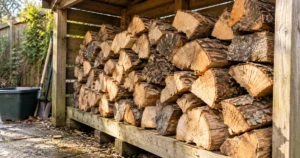
Where should you put your logs so they stay dry?
Outside, we recommend putting your logs on a raised base in a spot where air can move around the stack, then covering the top so rain cannot soak in. Keep the sides open, bring only a small working supply indoors, and check dryness before you burn them. The easy mistake is to treat logs like garden furniture and wrap the whole pile up tight. That keeps some rain off, but it can also hold damp air around the wood. A log pile needs protection from above and space around it. Storage matters whether you have bought logs or kept wood after tree work. Good storage protects what you have paid for, and it also gives fresh wood the best chance to dry over time. We see the same problems in small gardens, side returns and sheds: logs sitting straight on wet ground, a tarp pulled down to the floor, or a full pile stacked indoors before it is ready. None of those is hard to fix once you know the basic set-up.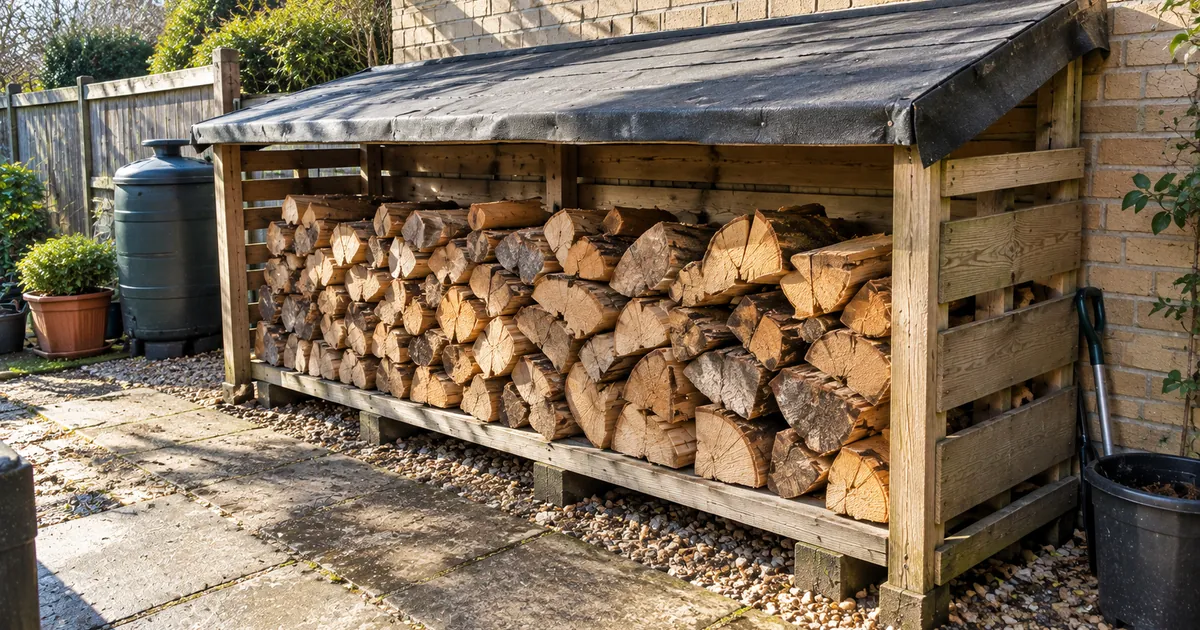
Table of Contents
Dry firewood needs air as much as cover
Good firewood storage is a simple set-up: raise the logs, cover the top and leave the sides open. Firewood stays usable when rain is kept off the top and air keeps moving through the sides, not when the whole pile is sealed. For natural drying, timber is best stacked on bearers, off the ground, in a sunny and windy place, under a waterproof cover with open sides. If the usual wind can pass through the stack, the pile dries more evenly. That could mean a proper log store, a pallet with a cover, a rack, or a simple stack beside a shed where air still gets through.- Pick a dry, open spot with air movement. A sheltered corner is fine if the air does not get trapped there.
- Raise the logs on a pallet, rack or bearers. Soil, grass and damp paving push moisture into the bottom layer.
- Stack loosely enough for air to pass through. A tight wall of logs dries poorly, especially at the back.
- Cover the top with a roof, board or tarpaulin. The cover needs to shed rain away from the stack.
- Leave the sides open. Pulling a tarpaulin down over every side traps damp air.
- Keep a small indoor supply only for current use. Indoor space is for logs you are about to use, after they have dried properly outside.
Looking for Firewood and Logs?
We sell logs from our own tree work. Ask us what we have in and for a price.
Get a Free QuoteDelivery day decides the log pile
A delivery left on wet grass can lose its good start before you have had time to stack it. The same goes for a pile dropped tight against a wall with no air behind it, or in a side path where every wheelbarrow load has to be moved twice. Before logs arrive, clear the storage area and set the base ready. In North Hertfordshire and Central Bedfordshire homes, the best place is sometimes a patio edge, a side return, a shed bay with ventilation, or a small store near the back door. Around Henlow, Shefford and Stotfold, winter rain makes the ground choice matter more than people expect. Access counts as well. If the gate is narrow or the store sits at the far end of the garden, plan the route before the logs are tipped. A few boards, a barrow and a ready cover make the first hour easier, especially if rain is due. For a temporary pile, choose hard standing and get the logs raised as soon as you can. Even a short stay on wet grass can leave the bottom logs damp and dirty.
Put a simple label on each batch with the delivery date. It makes it much easier to use the oldest logs first and keep track of what has been drying longest.

Bought logs and fresh tree wood need different plans
Ask one thing first: are these logs for soon use, or are they a future supply? Bought logs and fresh wood from tree work need different handling, because storage for keeping wood dry is a different job from storage for drying it over a long period. The table below compares bought logs for near-term use with fresh wood kept from tree work.| Log type | Storage plan |
|---|---|
| Bought logs for near-term use | Keep them raised, covered on top and ventilated. Ask the supplier what is ready and how long it has been drying. |
| Fresh wood from tree work | Stack it outside with open sides and allow it to air dry before burning. Check dryness before use. |
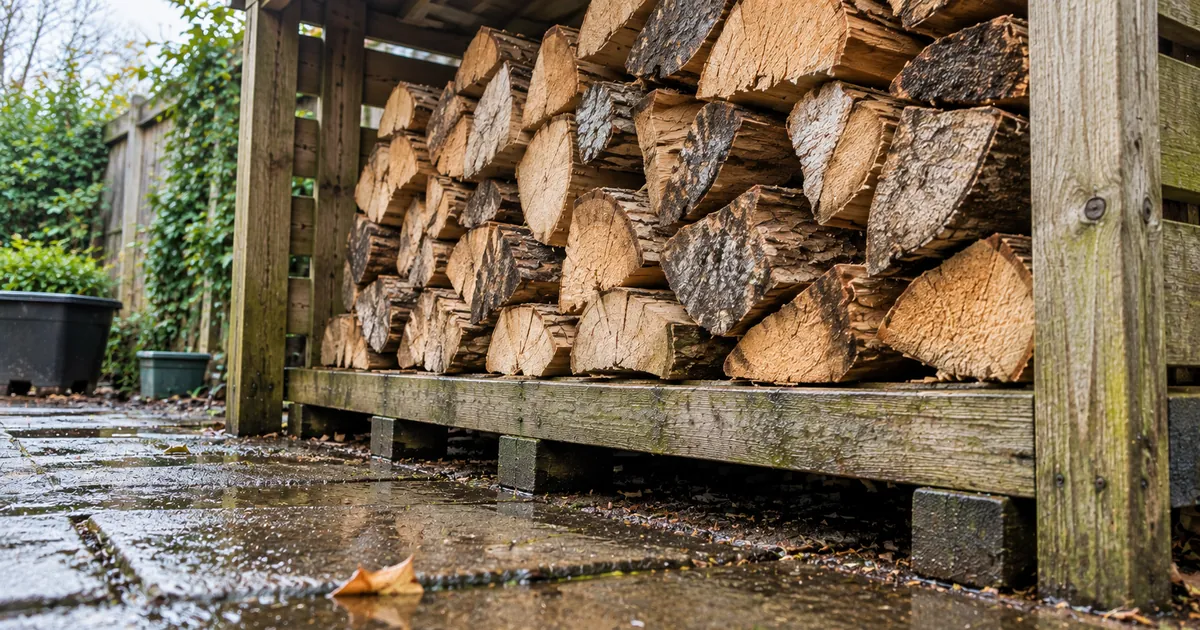
Dryness checks beat guesswork
A log can look acceptable and still hold too much moisture inside. Dryness matters more than the type of wood, because damp logs burn poorly and create avoidable smoke.Moisture meters give the clearest check
Defra UK Air sets the dry wood target at 20% moisture content or less for wood burned at home. Above that level, wet wood produces more smoke, particles and tar deposits, and it can damage the appliance and chimney. A firewood moisture meter gives the clearest check before you use logs in a stove, open fire, fire pit or garden fireplace. We treat it as the most useful small tool for anyone storing a regular supply, because it takes the guesswork out of the pile. Test a few logs from different parts of the stack, especially pieces from the lower rows or the back. Those spots can hold moisture for longer if the pile has poor airflow.Dry-log signs are only indicators
Without a meter, several signs can suggest that logs are dry. A dry log may feel lighter than a similar log, sound hollow when tapped, show cracked ends, have looser bark and look lighter in colour. Those signs are useful checks, and a meter gives the safer answer. If a log struggles to burn well or creates more smoke than expected, set that batch aside and let it dry longer in a better-ventilated stack.If you store logs near a wall, leave a small gap behind the stack and check it after heavy rain. Trapped moisture on the back row is easy to miss until the wood starts to soften.

Simple storage outperforms quick fixes
Two storage habits give very different results. A simple raised stack with a roof and open sides protects logs better than a plastic-wrapped pile that traps damp air. A good store does not need to be fancy. A basic log store, a rack, a pallet with a waterproof top, or a ventilated shed space can all work if the same test is met: dry underneath, covered above, open around the sides. Quick fixes usually create extra work. A pile gets wet, then it is wrapped tightly, then the bottom logs go soft or mouldy, then half the stack has to be moved again. Starting with a raised base and open airflow is easier to keep up through a wet spell. Keep your indoor basket for current use, rotate older logs forward, and check the stack before you burn from it. The best firewood storage is the one you can maintain without thinking about it every weekend.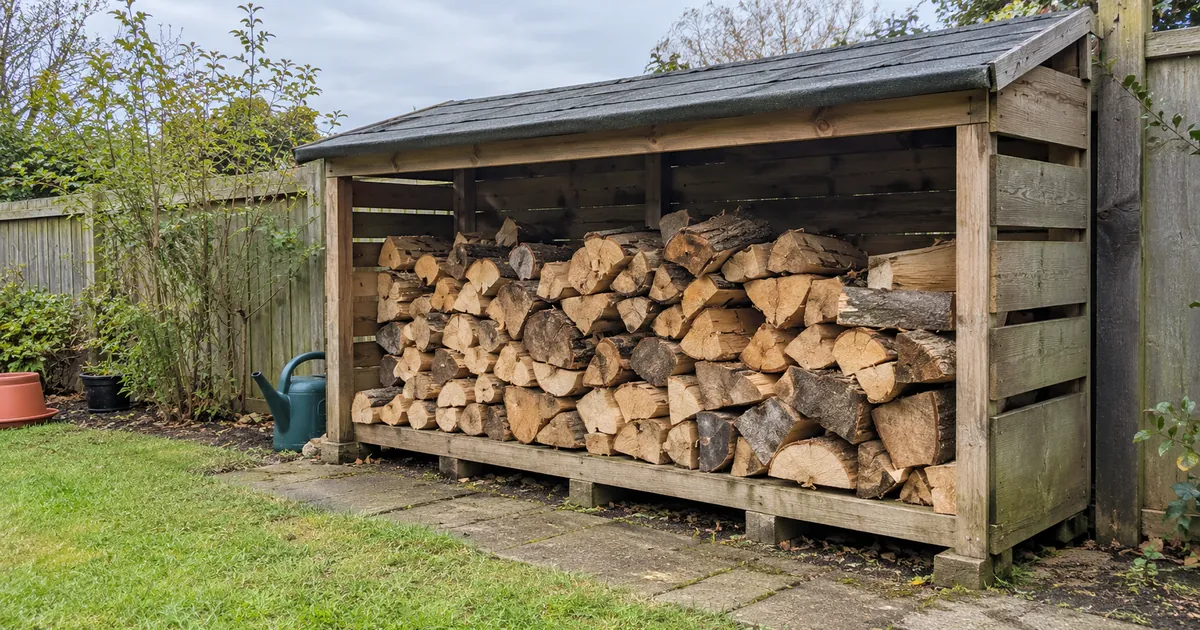
Stocking Up for Winter?
Get in touch to ask about logs and how to keep them dry and ready to burn.
Request a Quote