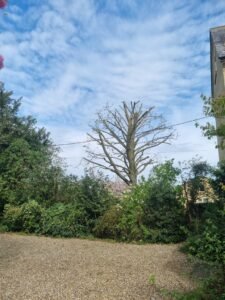
How can you tell if your tree is dying or dangerous?
A dying tree shows health signs such as dead branches, no leaves in season, peeling bark, fungi, or root problems. A dangerous tree shows safety signs, especially cracks, splits, heavy dead limbs, fresh leaning, or damage above a drive, path, shed, road, or neighbour’s boundary. Keep checks at ground level and safe.
Health and safety signs can overlap, but they are not the same. We look at what is wrong with the tree and what it could hit if a branch or the whole tree failed.
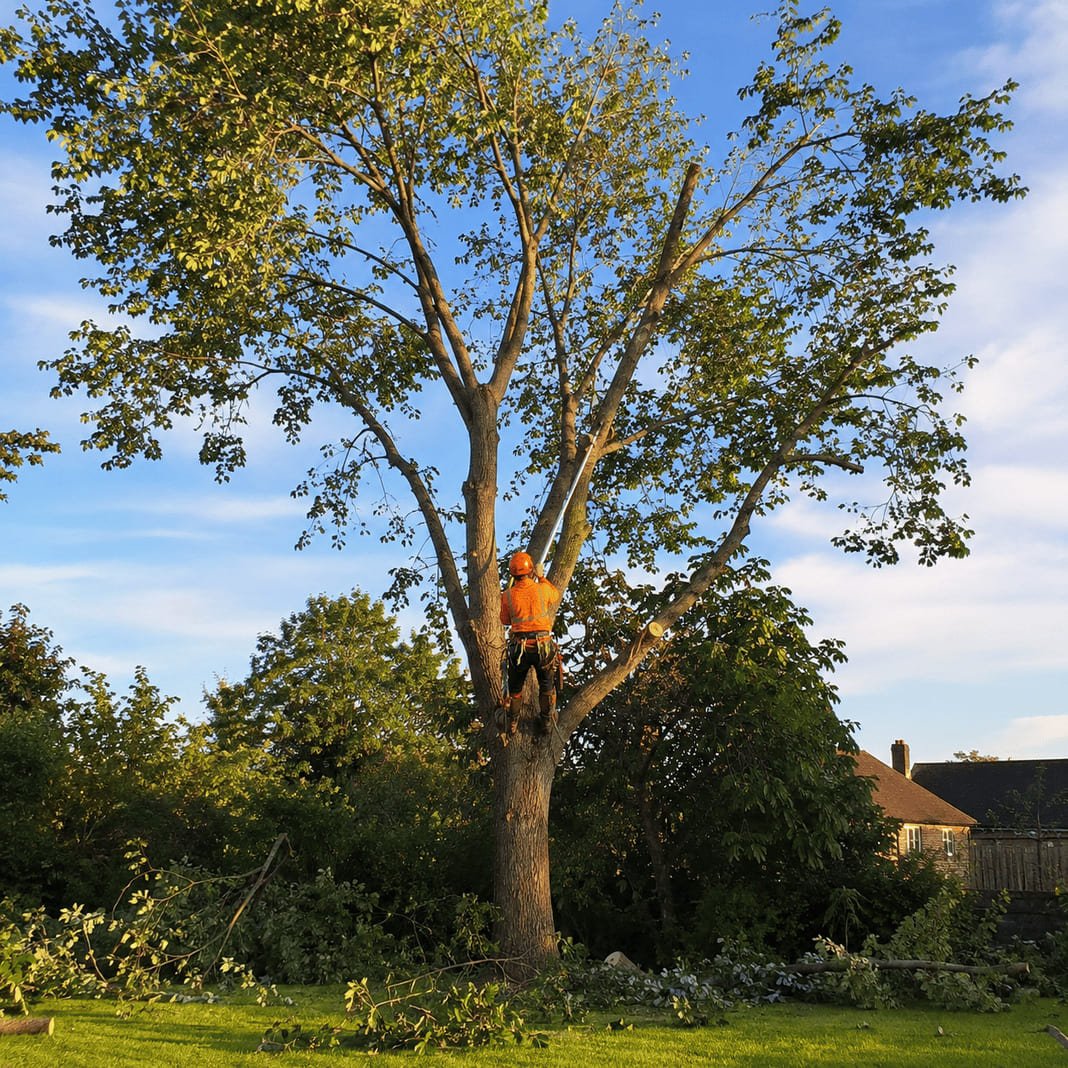
The signs a tree may be dying
Seasonal change matters. A deciduous tree can look bare in autumn and winter because it naturally loses its leaves, so a leafless tree is not automatically dead. Bare branches in spring or summer tell us much more, especially if nearby trees of the same type are in leaf.
At Treescapes, we would rather save a tree where that is safe and sensible. One weak-looking branch, a patch of peeling bark, or a small dead twig does not give the whole answer. The pattern across the tree matters.
Leaves, shoots and bark
No leaves during the growing season is one of the signs a tree may be dying, but we still look at the whole canopy. A tree with a few dead branches may need pruning. A tree with a mostly bare canopy and brittle shoots needs closer inspection.
Bark gives useful clues from the ground. Living shoots tend to have smooth, firm bark. Dead or dying shoots tend to have flaking, peeling, or shrivelled bark. Large areas of loose bark on the trunk deserve care, especially if you also see dead branches above.
A first-timer can easily read too much into bark changes. Some trees naturally shed bark in patches, so bark alone does not settle whether a tree is dead. Bark matters most when it sits alongside other signs, such as no leaves in season or branches breaking off.
Roots, fungi and the scratch test
Fungi or mushrooms at the base of a tree mean we take a closer look. They do not automatically mean the tree has to come down, but they can point to decay around the base or roots. Soft, rotting roots are more concerning than surface mushrooms on their own.
The RHS explains a simple scratch test for a small, reachable stem. Green under the bark suggests the stem is alive. Brown under the bark suggests dead tissue. Use that only on a small stem you can reach safely from the ground, not on a high branch or a large limb.
A tree that still shows life, such as green under the bark or firm growth low down, may be worth watching for a time or checking again in spring. That judgement changes if the tree is close to a place people use every day, which is where health signs turn into safety questions.
We are a family-run team covering North Hertfordshire and Central Bedfordshire. Ask us for a free quote.
Get a Free QuoteThe signs a tree may be dangerous now
A cracked limb over a quiet back corner of a large garden is a different problem from the same cracked limb over your drive or a public footpath. The defect matters, but the target below it decides how quickly you need to act.
The National Tree Safety Group names heavy dead parts, splitting, weak forks, bark and wood fractures, and soil cracks as signs that can point to structural defects. Those signs are not automatically hazardous on their own. We judge them by position, size, and what would be hit if the part failed.
A long-standing lean is less concerning than a new or worsening lean. Fresh movement in the soil around the base, a raised root area, or cracks in the ground can change the picture quickly, especially after high winds in Central Bedfordshire and North Hertfordshire.
Storm damage needs a calm but prompt look. Do not pull at a cracked branch, stand under a hanging limb, climb the tree, or try to cut a large branch from height. If a damaged limb sits above a greenhouse, play area, road, garden path, or neighbour’s boundary, keep people clear and get a qualified arborist, a trained tree specialist, to assess it.
Sometimes the answer is selective pruning or reducing weight in the canopy. Sometimes the safest work is to remove a failed branch. When the defect and the target make the risk hard to judge, specialist advice is the sensible line.
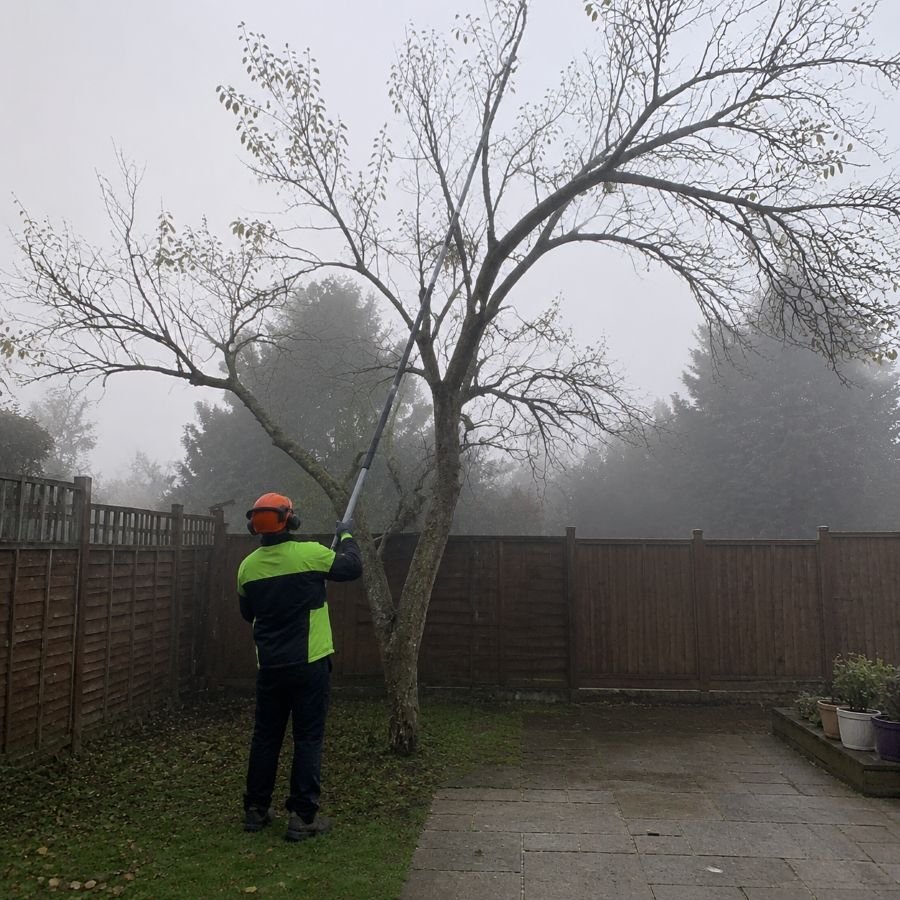
If a tree has a new lean after strong winds, take a photo from the same spot before and after. That makes it easier to tell whether the lean is changing.
The safe ground-level check
If you want to check the tree yourself, keep it to what you can see safely from the ground. Homeowners are not expected to prove a tree is safe, and the National Tree Safety Group is clear that concern and uncertainty are good reasons to seek specialist advice.
Use this simple sequence:
- Start from a safe distance. Look at the whole tree first, including the lean, canopy shape, and whether one side has died back suddenly.
- Check the ground around the base. Look for fresh soil cracks, lifted roots, soft ground around the trunk, or signs that the root area has moved.
- Look up without standing under suspect branches. Heavy dead limbs, hanging branches, cracks, and split forks deserve attention, especially after storms.
- Note what the tree could hit. A weak branch over a drive, road, shed, path, seating area, or boundary carries more risk than one over an unused corner.
- Decide the level of response. Monitor minor changes in a low-use area, arrange a tree surgeon inspection for clear defects, and keep people away from damaged branches over places people use.
Keep the check observational. If the tree is near overhead cables, large limbs, roads, or places where people pass, leave the work itself to a qualified team.
The right response is not always felling
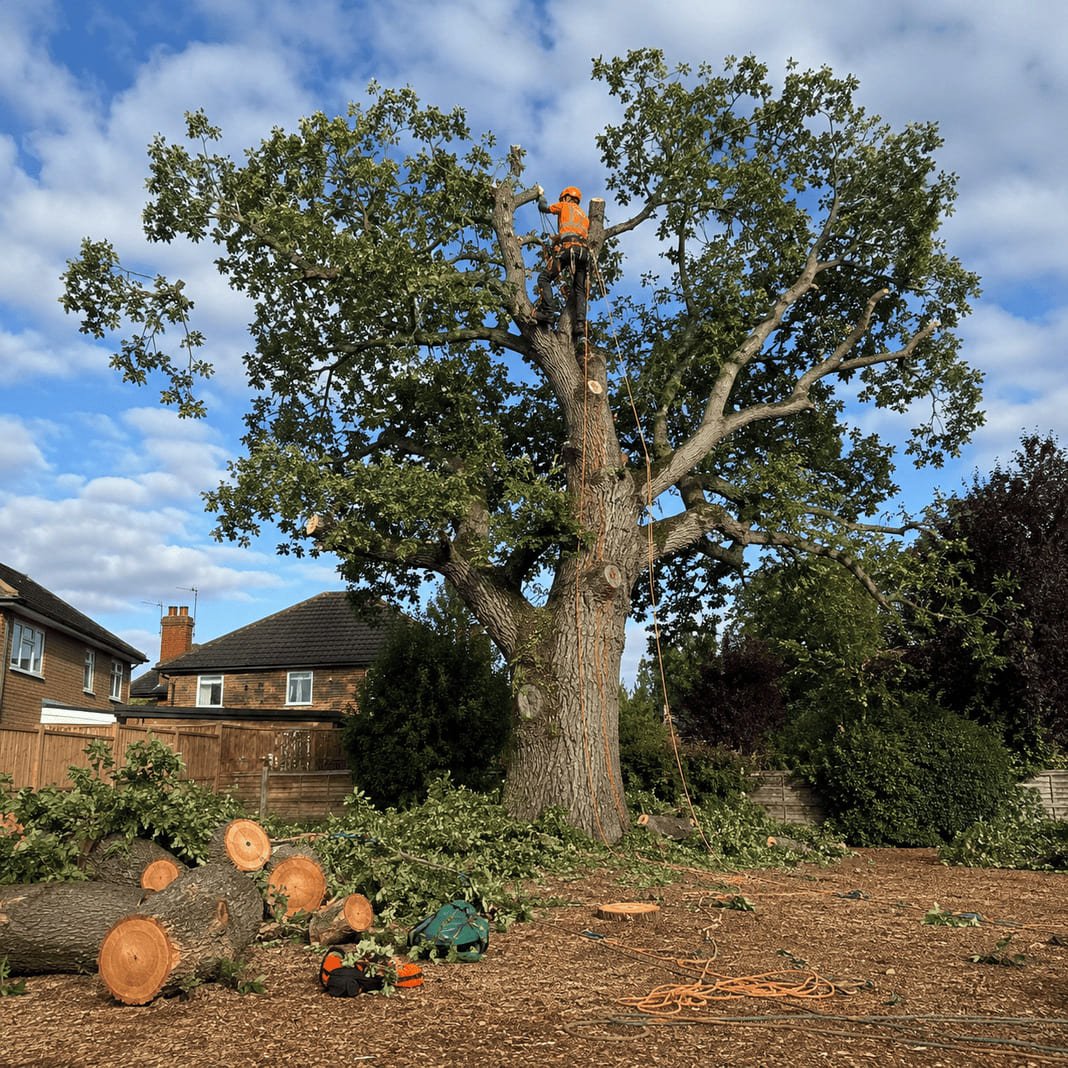
Removal is only one possible outcome after a worrying sign. We start by asking what problem needs solving: poor health, a cracked branch, too much weight in one part of the canopy, or a tree that now threatens something below it.
Tree pruning can remove dead, cracked, crossing, or rubbing branches where the rest of the tree is sound. Crown reduction reduces the size and weight of the branch canopy where that suits the tree. Crown thinning and lifting can improve clearance and reduce crowding without taking the tree out.
Treescapes Garden Services is a family-run local team based near Henlow, and our approach is to keep good trees where they can safely stay. If removal is needed, we explain why. If a smaller piece of work will deal with the risk, we say that instead.
Practical details matter to homeowners too. A clear quote should state the work, the waste handling, and what happens to the site afterwards. A safe job should leave you with the right tree work done, not a garden full of branches and unanswered questions.
When you see fungi at the base, check the ground around the roots as well. Fresh cracks, lifted soil, or soft ground are stronger warning signs than mushrooms alone.

The long-term view on unsafe trees
Guessing is where tree problems drag on. You watch a bare canopy, then a branch drops in bad weather, then the question becomes urgent. The other common mistake goes the opposite way: one worrying sign appears, and the tree is treated as lost before anyone has checked whether pruning, reducing, or thinning would deal with the issue.
Permissions can also affect the work. GOV.UK guidance says a tree protected by a Tree Preservation Order usually needs local planning authority consent for work on diseased or dying trees unless an exemption applies. For a dead protected tree, prior written notice is usually required unless urgent work is needed because of an immediate risk of serious harm. In a conservation area, a section 211 notice may be needed before certain work. Since our area crosses North Hertfordshire Council and Central Bedfordshire Council, we treat permission checks as part of judging the job properly.
The better long-term approach sits between ignoring the tree and rushing to fell it. Check what you can see safely, judge what the tree could hit, then choose the least intrusive safe option with someone who understands both tree work and local permissions.
Tell us what you need and we will give you a free, no-obligation quote, usually within 24 hours.
Request a QuoteQuestions we get asked about unsafe garden trees
Can a dead tree be left standing?
A dead tree can sometimes be left for a time if it stands well away from people, buildings, paths, drives, roads, and boundaries. If it could hit anything important, we would want it assessed before you rely on guesswork.
Is a leaning tree always unsafe?
A leaning tree is not always unsafe. A new lean, a lean that is getting worse, or movement in the soil around the roots is much more concerning than a lean the tree has had for years.
Do mushrooms at the base mean the tree will fall?
Mushrooms at the base do not prove the tree will fall, but they are a sign worth checking. They can point to decay, especially if you also see soft roots, cracking, dead branches, or a change in lean.
What should you do if a branch cracks after high winds?
Keep people away from the area below the branch and do not try to pull it down or cut it from height. A cracked or hanging limb over a drive, path, road, shed, or neighbour’s garden needs a qualified tree surgeon to inspect it.
Who checks whether permission is needed for tree work?
A qualified local tree surgeon can help you check whether a Tree Preservation Order or conservation area rule affects the work. The final permission route depends on the local planning authority for your area.
This is general information, not professional advice.