
Is stump grinding or stump removal right for your plans?
For most gardens, we recommend stump grinding if you want the stump gone, the ground levelled and the area made usable again. Full stump removal makes more sense if roots or old stump material will block building work, a fence line, heavy landscaping or replanting.
Use the next job on that patch as your guide:
- Lawn repair: stump grinding is normally the tidy choice, provided the hole is filled with suitable topsoil and levelled properly.
- For a new border, we look at how much old root and sawdust will sit where the planting needs to go.
- Paving, fencing or building work: full removal, or grinding to a greater depth, may be needed where the old stump would get in the way.
- A disease concern changes the decision because the stump and main roots may need closer attention before new planting goes nearby.
Stump grinding and stump removal are different jobs, and choosing the bigger job just for the sake of it can mean extra mess in a garden that only needed a neat, level finish.
Grinding and full stump removal change different things below ground
Stump grinding deals with the visible stump and the main root plate by turning them into sawdust below ground level. Full stump removal digs out the stump and root ball, which means more disturbance and a clearer space for certain types of work.
The Royal Horticultural Society describes stump grinders as machines that grind tree stumps and large sections of roots into sawdust. That is the key difference. Grinding reduces the stump in place, while removal physically excavates the main stump structure.
At Treescapes, we look at what you want to do with the space before recommending either route because a stump in the middle of a lawn is a different problem from a stump sitting on a future fence line.
| Stump grinding | Full stump removal |
|---|---|
| Grinds the stump and main root plate into sawdust to the chosen depth. | Digs out the stump and root ball. |
| Leaves smaller and distant roots in the soil to break down. | Removes more of the main buried stump structure, although some smaller roots can still remain. |
| Causes less disturbance to lawns, beds, paths and narrow garden access. | Brings heavier digging and more ground disturbance. |
| Suits many normal garden stumps where the aim is a level finish. | Suits building work, major landscaping, some replanting plans and awkward obstructions. |
| The finish depends on proper filling, levelling and clearing afterwards. | The finish still needs making good after the excavation. |
Side access can decide the method as much as the stump itself. A machine has to get through the garden safely, and a narrow side gate, steps, paving or a tight corner can change how we plan the work.
We grind stumps down below ground level so you can use the space again. Ask us for a free quote.
Get a Free QuoteAftercare decides whether the patch is ready for grass, planting or hard landscaping
A stump in the middle of a lawn is a common example. The stump can be ground out well, but the lawn will still fail if the hole is skimmed over with sawdust and a thin layer of soil. The ground needs enough depth, clean topsoil and a level finish that can settle before the surface is repaired.
Woody grindings can be useful elsewhere in the garden, but they are poor main fill for a planting area. The Royal Horticultural Society says woody sawdust can cause nitrogen lock-up and possible nutrient problems for plants grown there for up to two years, so planting areas should be filled with good quality peat-free topsoil and allowed to settle.
Because we handle tree work and garden work, we think past the stump. The real finish may be turfing and seeding, a new border, a cleared area for a path, or ground preparation before fencing. That decision should be made before the grinder starts.
Grass needs clean soil and a level surface
For turf over a ground-out stump, the Royal Horticultural Society says shallow grinding to 20 to 25 cm below ground level is normally enough. In plain terms, the stump needs to be far enough down that fresh soil and grass can sit above it without the old woody material spoiling the surface.
Seed and turf both need a stable bed. After grinding, the hole should be cleared of excess sawdust, filled with suitable topsoil and levelled with the surrounding lawn. Some settling is normal, so a rushed finish can leave a low patch later.
Replanting in the same spot asks more of the ground
A new tree or larger shrub in the exact stump position needs more care than grass. Old roots, compacted ground and woody waste can all affect the planting hole, so grinding to a greater depth or full excavation may be the better route.
For replanting or landscaping, the Royal Horticultural Society gives at least 30 cm below ground level as the depth that may be needed. We use that kind of guidance as a starting point, then judge the actual stump, the soil and the planting plan in front of us.
Paving and fencing bring a different issue. The old stump does not need to support a plant, but it must not sit where a base, post hole or edge line needs firm ground. Planning the finish before work starts saves a second visit to deal with the bit nobody thought about.
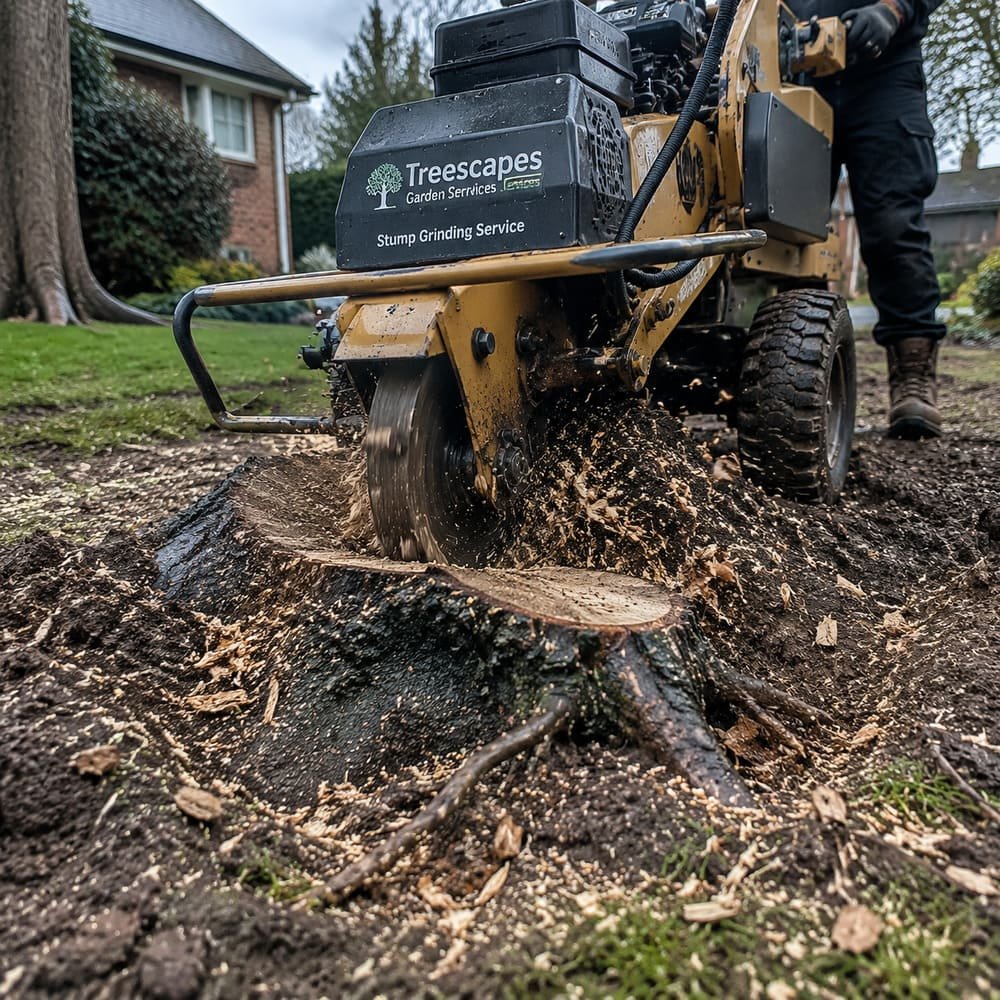
If you want turf or seed over the area, ask for the hole to be filled and levelled with suitable topsoil, since sawdust alone settles badly.

Safety, access and permission checks shape the right method
The awkward part of stump work is rarely the bit you can see. The difficult parts are the access route, the machine, nearby paving, fences, buried obstructions and what has to happen to the waste afterwards.
A small stump in open soil can sometimes be dug out by hand. A larger stump beside a path, fence or wall is a different job and may need a winch, mini-excavator, stump grinder or qualified tree surgeon. The tool has to match the stump and the garden around it.
The Health and Safety Executive has guidance called AFAG606(rev1), Mobile stump grinders, for safe working with these machines. It says that guidance should be used with the machine maker’s own instructions as part of the risk assessment. In everyday terms, stump grinders are serious kit, and they need proper planning, protective equipment and trained use.
At Treescapes, we check the access, the working area and the finish before the machine comes off the vehicle. Joe, our fully qualified arborist, is on every job, so safety and the garden result are judged together rather than treated as separate problems.
Permission is usually a quick check, but it should not be skipped where protected trees are involved. If a Tree Preservation Order applies, GOV.UK says consent from the local planning authority is normally needed before work such as cutting down or uprooting unless an exception applies. Conservation area rules can also apply to certain tree works.
We are based in Lower Stondon near Henlow and work across North Hertfordshire and Central Bedfordshire, so the council question depends on where the tree is. North Herts Council and Central Bedfordshire Council are separate, and we treat the address as the starting point for any permission check.
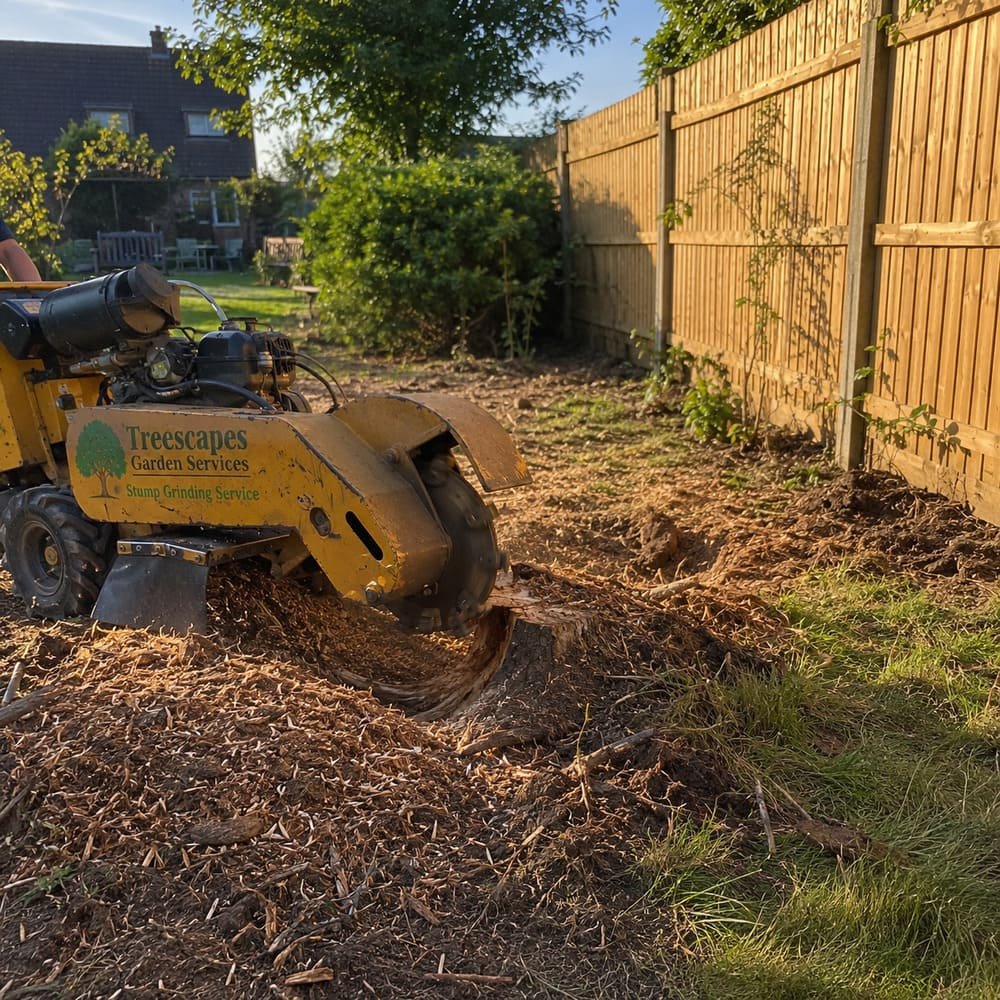
If you plan to fence, mark the post line first so the stump treatment matches the post holes and avoids a second visit.

The right choice is the one that still works later
Over the next 12 to 24 months, the best stump decision will be the one that fits the next use of the ground, because the surface finish is where poor planning shows up. A ground-out stump may look sorted on day one, but the result is only right if the ground can take turf, planting, paving, fencing or site clearance afterwards.
Current machine safety also stays relevant. The Health and Safety Executive’s mobile stump grinder guidance was updated in 2025, which is a useful reminder that stump work is machinery work, even in a back garden in Shefford, Stotfold or Baldock.
Our view is simple. Grind the stump where a neat, lower-impact garden finish will do the job. Remove more of it where the next work needs clear ground. The stump is one part of the job; the ground it leaves behind is the part you will use.
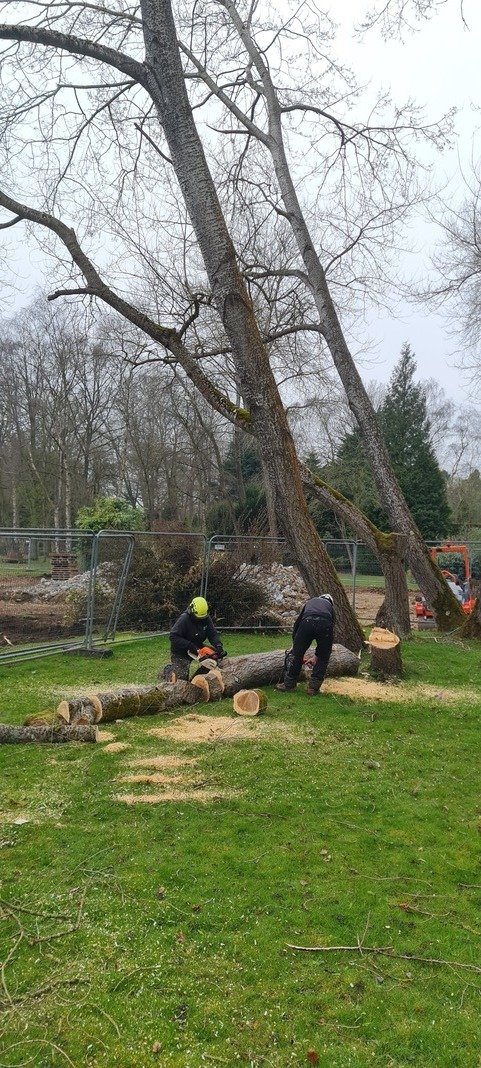
Tell us the size and where it is, and we will give you a clear, no-obligation price.
Request a QuoteQuestions we get asked about tree stumps
Do roots die after stump grinding?
Roots left in the ground usually break down over time after the stump and main root plate have been ground out. Some trees can send up shoots from living root material, so we check the tree type and the regrowth risk before advising you.
Can I dig out a small stump myself?
A small stump in loose soil may be possible by hand if you can work safely. Larger or awkward stumps need the right kit and training, especially where paving, fences, walls or tight access are involved.
Is stump grinding messy?
Stump grinding creates sawdust and wood chips, so some mess is part of the job. The important part is how the grindings are managed afterwards, especially if the area is being filled, levelled or planted.
Does a stump need full removal before fencing?
Full removal is not always needed before fencing, but the stump must not block the fence line or post holes. We judge the method by where the posts need to go and how firm the ground must be.
Can grindings be left in the hole?
Some grindings can be reused in the garden, but they should not be the main fill where you want grass or planting. Good topsoil and proper levelling give a better finish.
This is general information, not professional advice.





