Why do we sometimes not top a tree, even when I asked?
You may want the tree lower because it blocks light, worries you in wind, or upsets a neighbour. We will not top it because topping can weaken the tree, leave poor regrowth and make future work harder. We can usually suggest safer pruning that solves the real problem.
Topping is not proper pruning
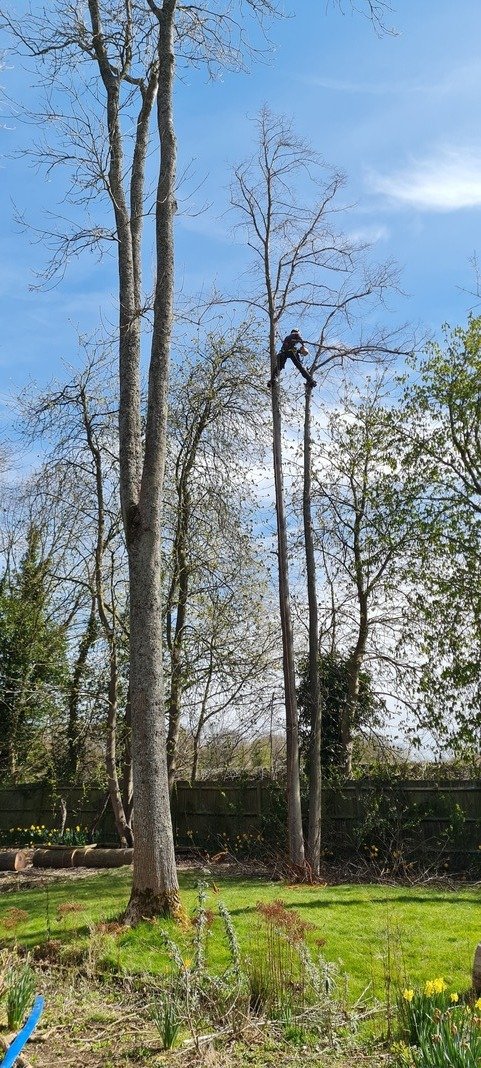
Topping means cutting the top or main branches back hard, often leaving bare stubs. It sounds simple, especially if the tree feels too tall, but the problem is where the cuts land and what they leave behind.
The International Society of Arboriculture describes topping as cutting branches back to stubs, or to side branches too small to take over the main growing role. That matters because a proper pruning cut respects the branch collar, which is the swollen area where a branch joins the trunk or a larger limb. A good cut gives the tree a better chance to close the wound.
Topping differs from careful pruning because it removes height without keeping a sound shape or structure. Once large stubs and weak points are left behind, the tree has to respond to damage and cannot settle into managed growth.
We are a family-run team covering North Hertfordshire and Central Bedfordshire. Ask us for a free quote.
Get a Free QuoteTopping can make the next problem worse
A topped tree can grow back and still be worse off. New shoots do not prove the work was sound because fast regrowth can come from stress and poor attachment.
Stress starts with lost leaves
Leaves feed the tree. When too much leaf-bearing crown is cut away in one go, the tree loses a large part of the system it uses to make energy.
The International Society of Arboriculture says topping can remove 50 to 100 percent of a tree’s leaf-bearing crown. We do not need to turn that into a biology lesson. For a homeowner, the point is simple: a hard cut that strips the tree of leaves can weaken the tree you wanted to make safer.
Decay starts with poor cuts
Poorly placed cuts leave exposed wood. If the tree cannot close those wounds well, decay can start where the stub was left.
A clean pruning job works with the tree’s natural structure. We look for sensible places to cut back to so the remaining branch can carry on doing a job. Bare stubs give the tree less to work with.
Fast regrowth is not a fix
After topping, shoots can push out quickly. In some species, the International Society of Arboriculture says new shoots can grow as much as 20 feet, or 6 metres, in one year, and those shoots can be weakly attached.
That creates a frustrating result. The height problem can return, but the tree now has weaker growth and poorer form. If your main worry was wind, shade or a branch near the house, that is a poor trade.
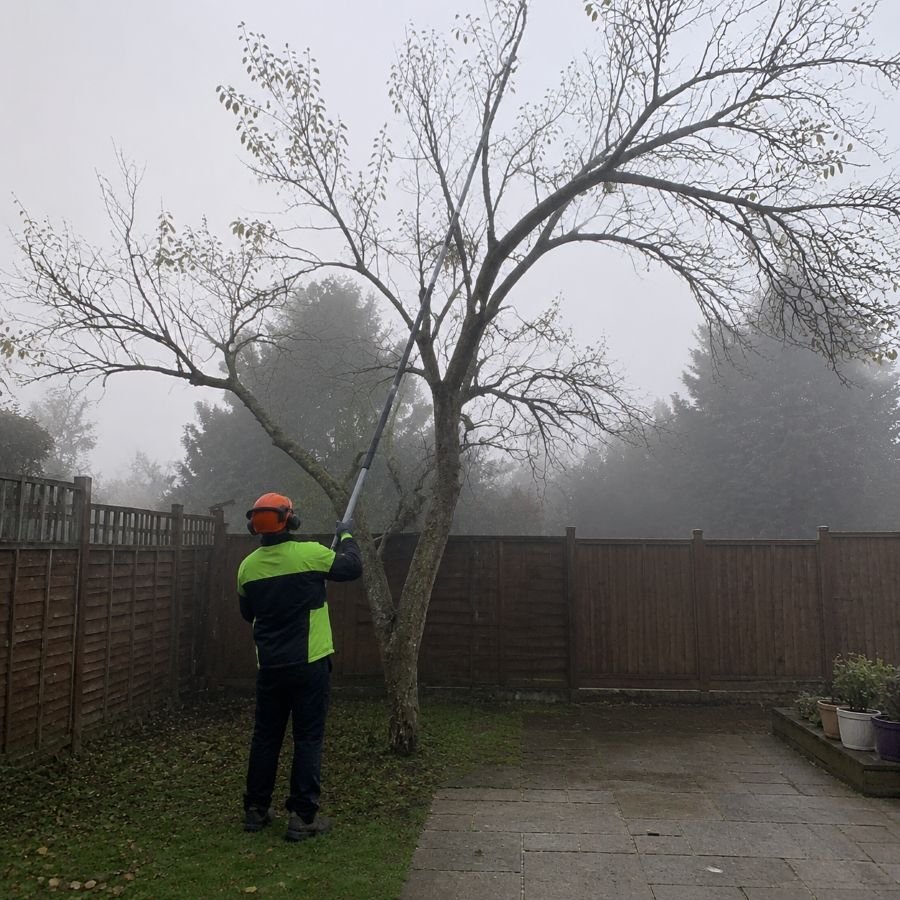
If a tree has already been topped, look carefully at the regrowth and any weak points before deciding on more work. A rushed second cut often creates another structural problem.
Crown reduction is the better answer for size
A better answer starts with the problem you need solved. Height is only one part of it because shade, low branches, one awkward limb and the wrong tree in the wrong place all need different work.
At Treescapes, we look first at what you are trying to fix, then we match the cut to the tree. BS 3998:2010, the British Standard for tree work recommendations, says crown reduction should be based on the aim of the work and the tree’s ability to cope with it. It also says reduction should normally keep as natural a shape as possible, with a healthy framework of smaller branches and twigs.
Here is the plain difference between the main options.
| Option | Best for | Why it is not topping |
|---|---|---|
| Crown reduction | Making the whole crown smaller | The shape and balance of the tree are kept where possible |
| Crown thinning | Letting more light through the crown | Selected branches are removed without simply chopping height off |
| Crown lifting | Raising low branches over a lawn, path or drive | Lower growth is managed without cutting the top away |
| Selective pruning | One branch that is damaged, crossing or badly placed | The cut is aimed at a clear problem |
| Pollarding | Trees already managed on a proper pollard cycle | It is a planned system, not a rough topping cut |
| Removal and replanting | A tree that is wrong for the space | The long-term answer may be a better tree, not repeated hard cutting |
Crown reduction is the option most people mean when they ask for the top to be cut off. The difference is that we are reducing the crown as a living structure, not leaving a row of stubs.
Thinning and lifting solve different complaints. If the room is dark, thinning may help more than lowering the tree. If branches hit a shed roof or block a path, lifting or selective pruning may deal with the nuisance without changing the whole tree.
Removal sits at the end of the scale. We would rather keep a suitable tree where we can, but some trees have outgrown their spot. In that case, felling and replanting can be the honest long-term answer.

Protected trees need checking first
When a tree may be protected, we check first. A tree can need sensible pruning and still need council consent or notice before any work starts.
A Tree Preservation Order can restrict topping, lopping, cutting down, uprooting, wilful damage and wilful destruction without written consent from the local planning authority, unless an exception applies. GOV.UK also explains that certain work to trees in a conservation area usually needs a section 211 notice six weeks before the work, unless an exception applies or consent is given sooner.
Around Henlow, Shillington, Ickleford and Stotfold, mature garden trees can sit in different council areas. The exact route depends on whether your property falls under North Hertfordshire Council or Central Bedfordshire Council. We treat that as a normal pre-work check, best done before any cutting starts.
If shade is the main issue, crown thinning can sometimes help more than reducing height. A careful diagnosis first will usually lead to a better result for the tree and your garden.
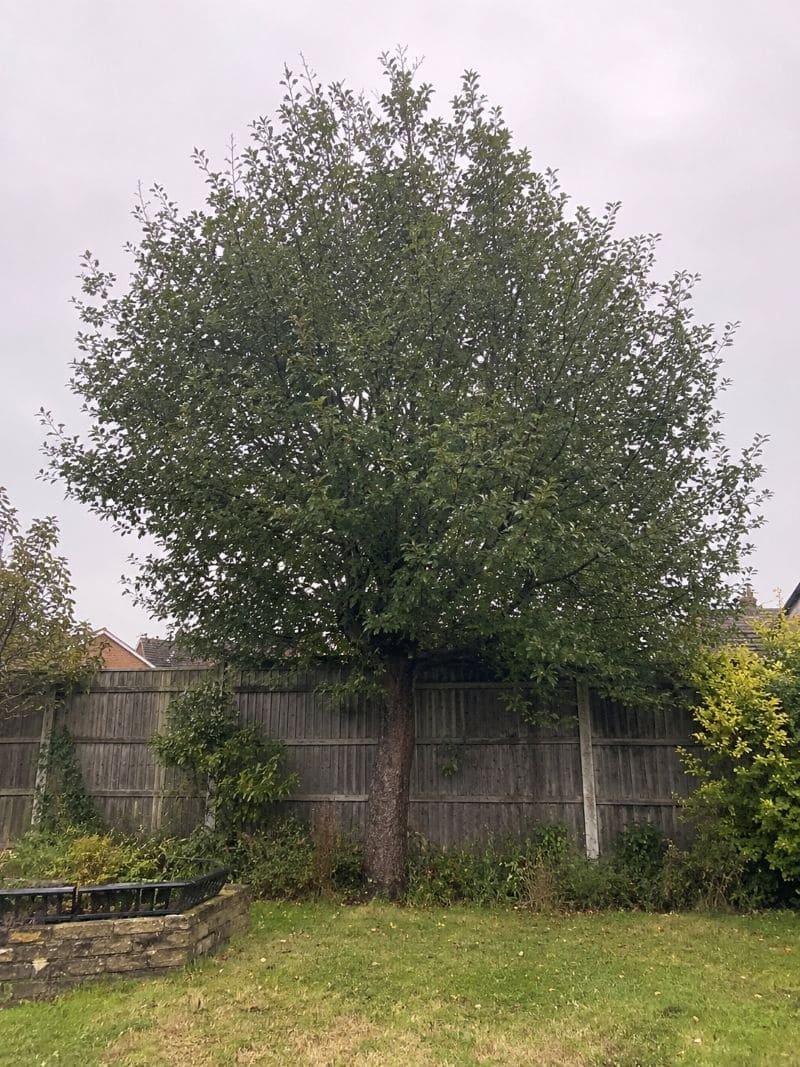
A good answer starts with the tree in front of us
Before we decide how to prune, we need to see what the tree is doing and what sits around it. A tree close to a house is not automatically a topping job. A tree that has been topped before is also a different case because it may need careful future management rather than an attempt to put it back exactly as it was.
A qualified arborist looks at practical details before recommending a cut:
- Species and condition. Some trees cope with reduction better than others, and a weak or decayed tree needs a different plan.
- What sits below the crown, such as a shed, path, drive, greenhouse or seating area.
- Access for safe work. Tight side passages, fences and neighbouring gardens affect how the job is planned.
- Wind exposure, especially on open plots and village-edge gardens.
- The real aim of the work, such as more light, less overhang or a smaller crown.
Treescapes Garden Services is a family-run team based near Henlow, and our approach is plain: we would rather do the right cut once than leave you with weak regrowth and another problem later. Once you know the difference, the question changes. You are no longer asking for the fastest height cut. You are asking which proper pruning option makes the tree smaller, safer and easier to live with.
Tell us what you need and we will give you a free, no-obligation quote, usually within 24 hours.
Request a QuoteQuestions we get asked about tree topping
Can you cut the top off a tree without killing it?
A tree may survive topping, but survival does not mean the cut was good for it. Topping can weaken the tree, damage its shape and leave regrowth that is less secure.
Is crown reduction the same as topping?
Crown reduction is different because it aims to reduce the size of the crown while keeping the tree’s shape and structure where possible. Topping is a rough height cut that leaves stubs or poor branch ends.
What should I do if my tree has already been topped?
A previously topped tree needs a careful inspection before more work is planned. We look at regrowth, decay, weak points and what sits below the tree before deciding whether pruning, longer-term management or removal is the right answer.
Can I top a tree to stop it getting taller?
Topping is a poor way to control height because regrowth can come back fast and weak. Crown reduction or a longer-term pruning plan is usually a better route if the tree is suitable.
Do neighbours have a say if my tree blocks their light?
Neighbour concerns are worth taking seriously, but the work still needs to suit the tree and any permission rules. A careful pruning plan can often reduce the problem without leaving the tree in worse condition.
This is general information, not professional advice.





