Which is right for your tree?
For most valued garden trees, we look at crown reduction first because it reduces size while keeping the tree’s natural shape. Pollarding suits some trees, especially existing pollards, but it is a repeat pruning system. The right choice depends on the species, condition, past cuts and the problem you need solved.
A common mistake is asking for a tree to be “lopped” or “taken down a bit” without knowing what that cut will do. Hard cutting can leave you with a tree that looks poor, grows back badly, or needs more work later.
We start with the problem. Shade, spread over a roofline, branch weight, lost light and awkward access all point to different answers. Topping is not the same as crown reduction or proper pollarding, and it should not be used as a shortcut.
Crown reduction is usually the gentler garden choice
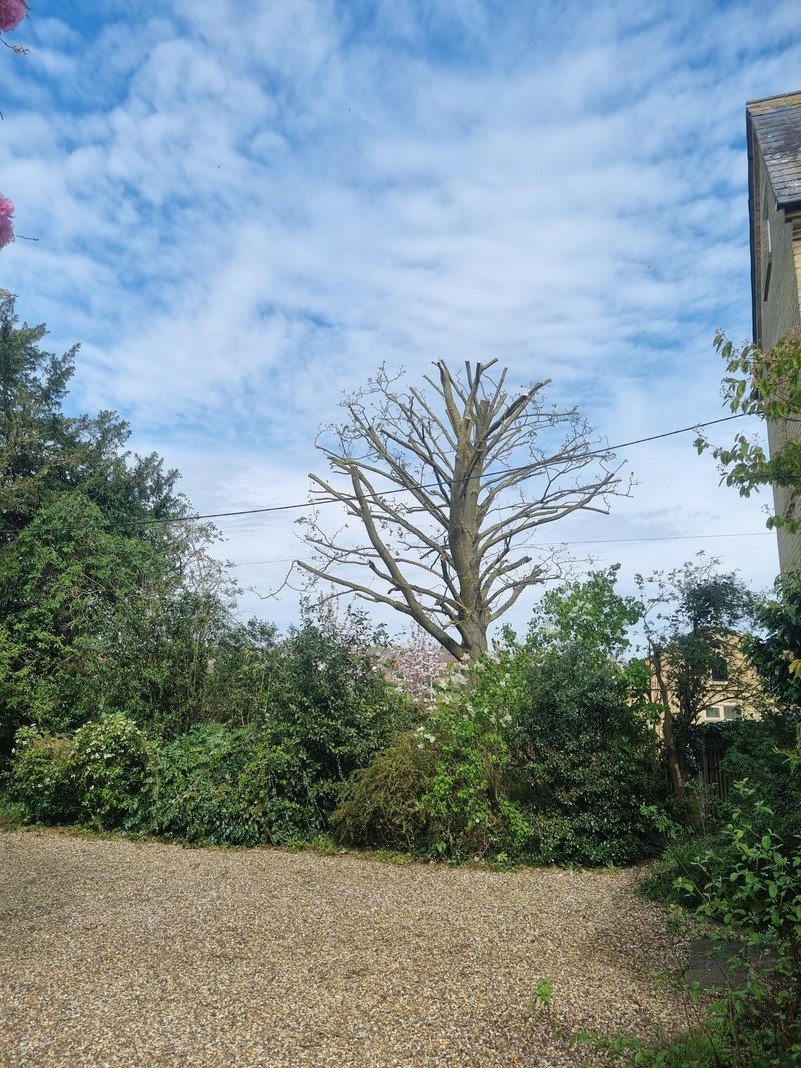
Crown reduction makes the crown smaller while keeping the broad outline of the tree. We use it where a tree has outgrown its space but still deserves to be kept as a proper garden feature.
A crown is the branch and leaf structure above the trunk. In a tree crown reduction, selected branches are shortened back to suitable points, so the finished tree still has balance. The aim is a smaller, tidier crown, not a stripped frame with random shoots.
In a garden, that can help where branches are spreading over a lawn, leaning across a drive, brushing a roofline, or taking too much light from one part of the space. We may also look at crown thinning or crown lifting if the issue is light through the canopy or low branches, because reducing the whole crown is not always the neatest answer.
The Royal Horticultural Society says that when a tree has outgrown its space, reduction is usually done through pruning, although replacing the tree with one better suited to the space can be the answer in some cases. That last point matters. If a tree is simply too big for the garden and will keep fighting the site, repeated pruning may only delay the same problem.
Cut quality decides a lot. Poor cuts can leave weak regrowth, spoil the shape, or put too much strain on parts of the crown that remain. Our crown reduction service is planned around the tree’s shape and future growth, so the cut solves the actual problem without taking more than needed.
We are a family-run team covering North Hertfordshire and Central Bedfordshire. Ask us for a free quote.
Get a Free QuotePollarding is a repeat system, not a quick cut
Pollarding can be a proper tree management method, but it changes the way the tree is cared for from that point on. It is used to keep some trees smaller than they would naturally grow, and it is normally started once the tree has reached the chosen height.
At Treescapes, we treat pollarding as a long-term tree management decision, not a quick way to make a large tree smaller. Once a tree is pollarded, the regrowth needs to be managed again and again. The Royal Horticultural Society describes pollarding as work that is usually repeated every year or every few years to avoid problems.
Existing pollards are different
A tree that has already been pollarded has an established framework. The next job is to manage regrowth back to those pollard points, provided the tree is still healthy enough and the cuts are sensible.
Suitable species matter too. London plane and common lime are examples that the Royal Horticultural Society lists as especially suitable for pollarding, but that does not mean every garden tree will respond well. Species, condition and past pruning all change the answer.
Mature trees need care
A mature tree that has never been pollarded is a different case. Heavy removal of the crown can be too much for some trees, especially if they are already in poor condition or have large old limbs.
We look at the tree in front of us before naming the method. A mature garden tree near a house in Shefford may need a careful crown reduction, while an established pollard in another garden may need routine pollard management. The same word on a quote does not mean the same job in a tree.
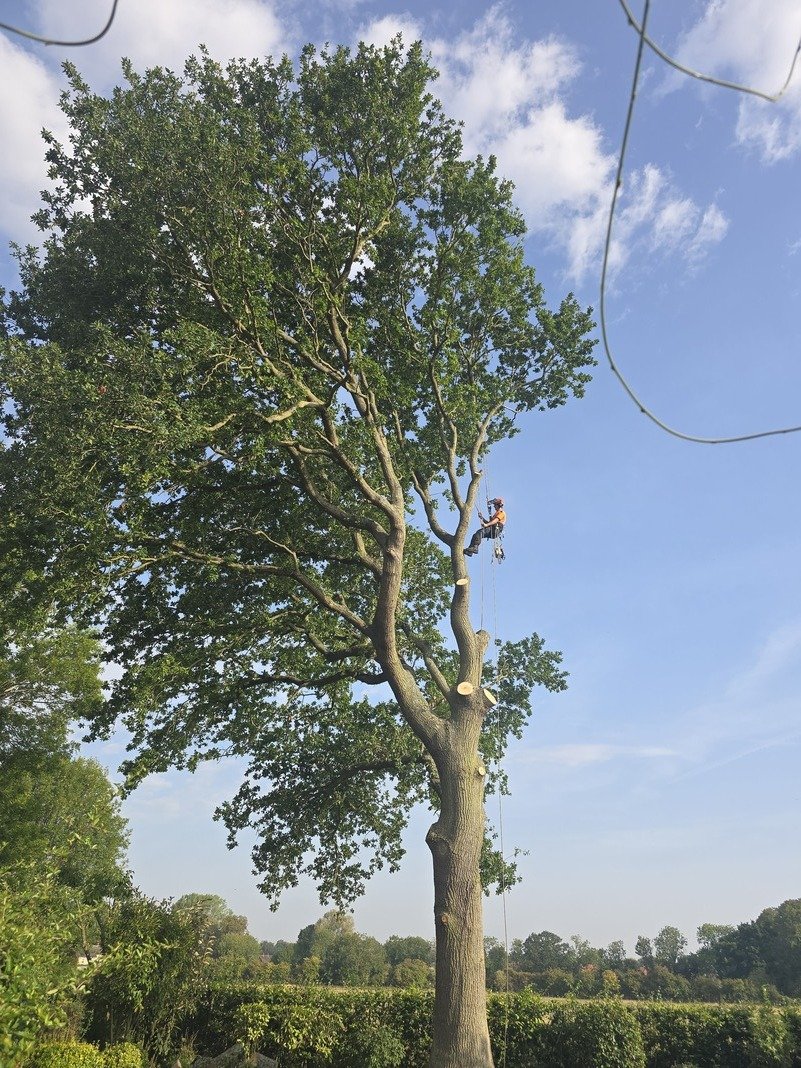
If a tree has already been pollarded, keep the same system going only if the tree is still healthy and the regrowth is suitable. A one off heavy cut often creates a different problem later.
The finished tree looks very different
The choice between crown reduction and pollarding is often easiest to understand by looking at the result. One keeps a natural crown in a smaller form, while the other leaves a managed framework that regrows from set points.
| What you are judging | Crown reduction | Pollarding |
|---|---|---|
| Main aim | Reduce the crown size and spread | Keep a suitable tree at a managed height |
| Finished look | Smaller, balanced, still recognisable as the same tree | Stark framework straight after cutting, then strong regrowth |
| Best suited to | Garden trees that need less size, shade or spread | Existing pollards or suitable trees planned for repeat work |
| Maintenance | Future pruning depends on growth and site pressure | Repeat pruning is part of the method |
| Common mistake | Asking for too much to be removed | Treating it as a one-off hard cut |
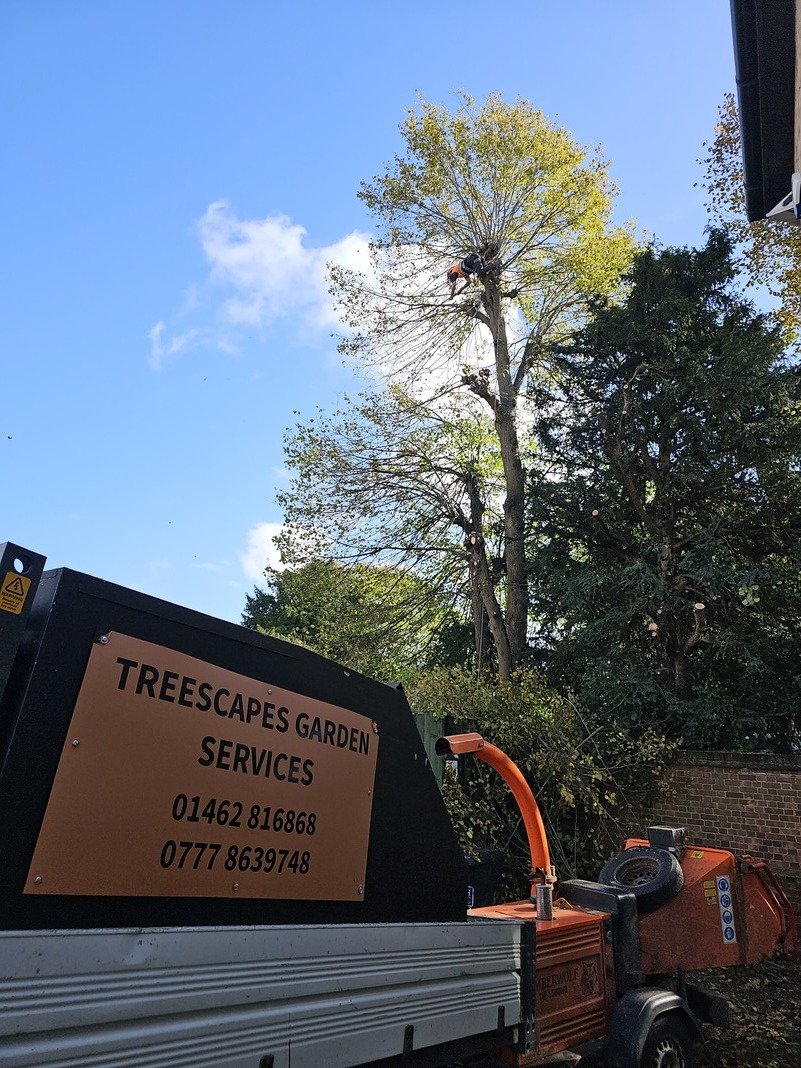
Both methods create waste, and a well-run job plans for access, branch handling and clearing up before cutting starts. That matters in smaller gardens, where a chipper, drag route and parked vehicles can affect how the work is done.
Pollarding is also different from topping. Topping is the rough removal of the upper tree without the same planned structure or future management. Proper tree surgery should leave you clear on what will be cut, why that cut is being made, and what the tree will look like afterwards.
Permissions and safety need checking early
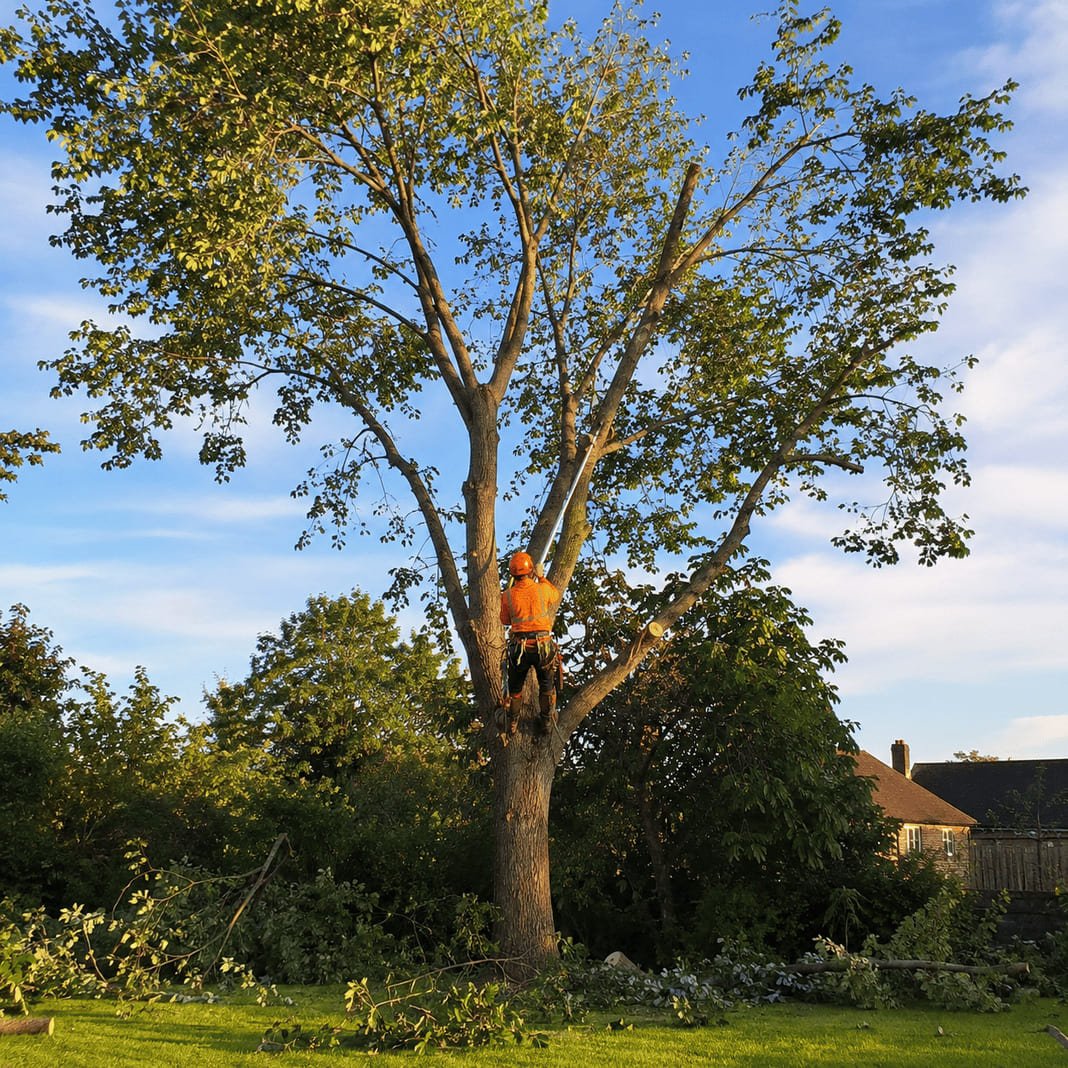
When a tree is protected or the work sits above easy ground level, checks need to happen before any saw starts. Permission, access and safe working are normal parts of planning crown reduction or pollarding.
A Tree Preservation Order, often called a TPO, protects a tree from work without written consent from the Local Planning Authority. GOV.UK also says that for certain work to trees in a conservation area that are not protected by a TPO, you must normally notify the Local Planning Authority 6 weeks before the work. A Section 211 notice is the notice used for that conservation area tree work.
Across North Hertfordshire and Central Bedfordshire, the correct route depends on your council. Older gardens and conservation areas around places such as Stotfold, Henlow and nearby North Hertfordshire need care on this point, because one local rule should not be assumed to cover every address. The Planning Portal is one common route for tree works applications and notices.
Safety checks are more practical than dramatic. Large branches, ladder work, awkward access and chainsaw use are strong signs that the job belongs with a qualified tree surgeon. Treescapes Garden Services is based near Henlow and works across North Hertfordshire and Central Bedfordshire, so we are used to checking the tree, the site and the likely permissions before setting out the work.
If your main issue is shade, look at where the light is blocked before choosing a method. Crown reduction, crown thinning and crown lifting each solve a different problem.

The right cut starts with the tree in front of us
A healthy tree blocking light at the back of the house does not automatically need pollarding. We would first look at where the shade falls, how the crown has spread, and whether a reduction, lift or thin would solve the problem with less severe pruning.
Method comes after assessment. The useful order is simple: name the problem, inspect the tree, then choose the cut. If the tree has been pollarded before and suits that system, continued pollard management may be right. If the tree is a valued garden tree with a good shape, crown reduction is often the better starting point.
You do not need to know the technical answer before asking for help. You only need to know what to check: the tree’s condition, its past pruning, its position, the permissions, and whether the proposed cut leaves you with a tree you still want in the garden. Once those points are clear, the choice stops being a guess and becomes a practical decision.
Tell us what you need and we will give you a free, no-obligation quote, usually within 24 hours.
Request a QuoteQuestions we get asked about crown reduction and pollarding
Can crown reduction let more light into your garden?
Crown reduction can help with light where size and spread are the main issue, but crown thinning or crown lifting may be a better fit in some gardens. We look at where the shade falls before choosing the cut.
Is pollarding bad for trees?
Pollarding is not automatically bad, but it has to suit the tree and the future care plan. It works best as a planned repeat system, especially where the tree has already been managed that way.
Can crown reduction damage a tree?
Crown reduction can damage a tree if too much is removed or cuts are made in the wrong places. Good pruning keeps the tree balanced and avoids leaving poor branch ends that regrow badly.
What happens to the branches and waste after the work?
Branches and cut material should be planned for as part of the job, not treated as an afterthought. We think about access, removal and tidy working before we start cutting.
Do you need permission for a small pruning job?
Permission depends on whether the tree is protected or stands in a conservation area. If a TPO applies, written council consent is normally needed before work starts.
This is general information, not professional advice.





