What is the short answer?
Crown reduction means shortening selected branches across the top and sides of a tree so it becomes smaller while keeping a natural shape. We use it when a healthy tree has outgrown its space, casts too much shade, or has heavy branches. It is different from cutting the top off.
Good crown reduction starts with the tree, not with a guessed amount to remove. A qualified arborist looks at its health, branch structure, position, and the reason you want it reduced before deciding whether tree crown reduction is the right answer.
Crown reduction is not a shortcut
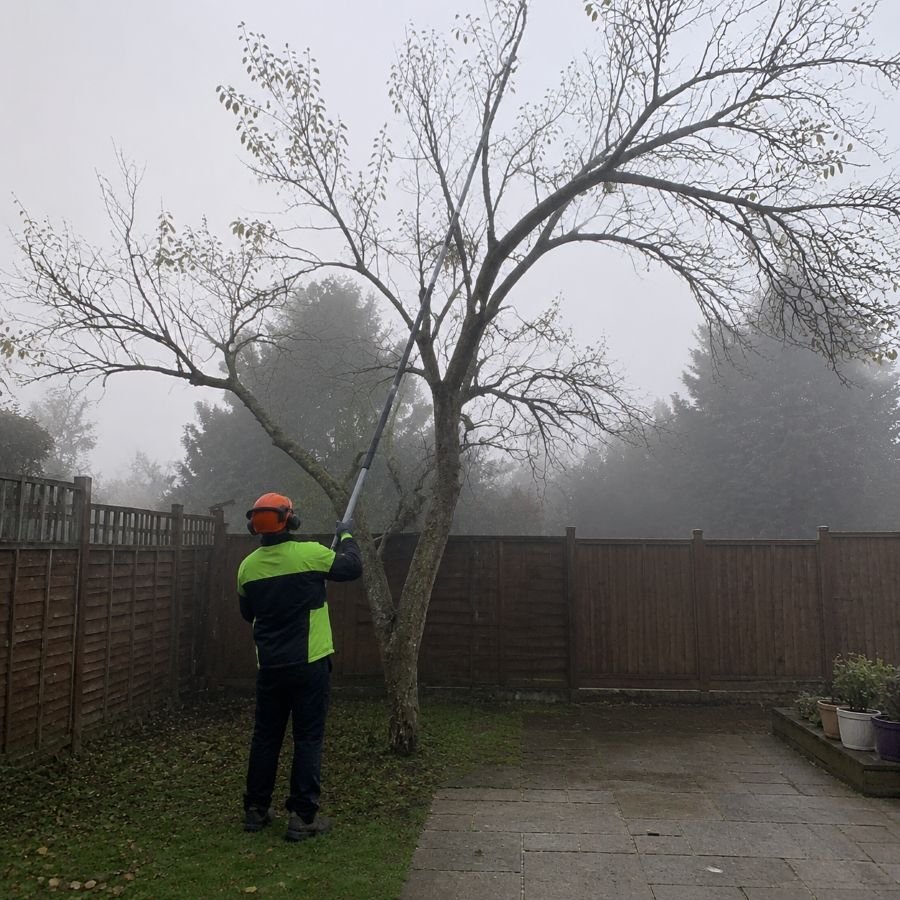
Crown reduction is controlled tree pruning. It reduces the crown, which is the branch-covered part of the tree, by cutting back selected limbs to suitable smaller branches. Done properly, the tree should still look like the same tree, only smaller and better balanced.
Several terms get mixed together, so it helps to separate them before you ask for work.
| Method | What it changes | Best used for |
|---|---|---|
| Crown reduction | Reduces height or spread while keeping the natural outline | A healthy tree that has become too large for its space |
| Crown thinning | Removes selected branches within the crown | Letting more light through without making the tree much smaller |
| Crown lifting | Raises the lower canopy | Clearance over lawns, drives, paths, or boundaries |
| Pollarding | Removes the head or crown as a repeated pruning system | Specific trees managed this way from the right stage |
| Topping or rough lopping | Cuts the upper crown harshly | We do not treat this as proper crown reduction |
Pollarding deserves a careful word because people often confuse it with crown reduction. The RHS describes pollarding as an extreme form of pruning where the entire head or crown is removed, and it brings repeated pruning after that. That is a different long-term system, so it is not a quick version of crown reduction.
Good cuts also matter. A branch has a branch collar, which is the swollen area where it joins a larger limb or trunk, and that area needs to stay intact so the tree can close the wound naturally. Pruning paint is no longer recommended in most cases, so neat cutting beats painting over a poor cut.
We are a family-run team covering North Hertfordshire and Central Bedfordshire. Ask us for a free quote.
Get a Free QuoteThe tree decides the cut
A crown reduction is only a good idea if the tree can cope with the work. Size is part of the decision, but health, species, branch shape, and the amount you want removed matter just as much.
Use these signs as a simple guide before you decide what to ask for:
- May suit: A healthy tree has grown too tall or wide for a garden, roofline, drive, or neighbouring boundary, and a measured reduction would solve the problem.
- May suit: Heavy branches are putting too much weight over one area, so reducing selected limbs would improve balance.
- May suit: Dead, diseased, crossing, or torn branches need pruning attention, and the size work can be planned at the same time.
- May not suit: A weak or declining tree has too little strength to recover well after pruning.
- May not suit: The reduction you want is so heavy that the tree would lose its shape or send out poor regrowth.
- Long-term rethink: A tree that is simply too large for the garden may need another plan, including a better-sized replacement tree in some cases.
The RHS says size reduction suits trees that tolerate pruning, and earlier work is better than leaving a tree until the job becomes harder and recovery is less likely. That matches what we see in gardens around North Hertfordshire and Central Bedfordshire: the longer a tight-space tree is ignored, the fewer good choices remain.
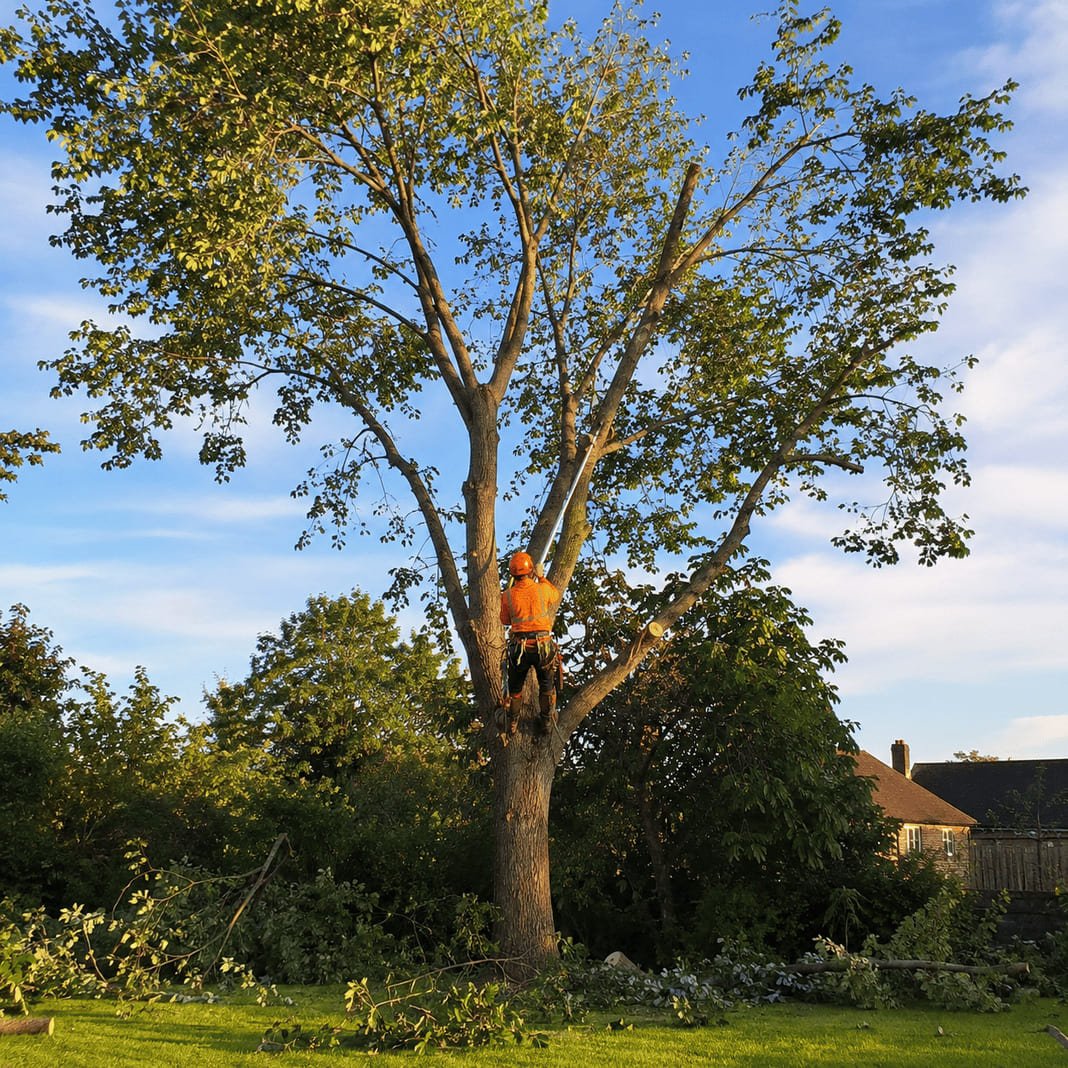
If you mainly want more light, crown thinning may suit the tree better than crown reduction, because it opens the canopy without making the tree much smaller.
The day’s work should be controlled
A tree close to a drive, roofline, or neighbouring fence needs more than someone cutting from the ground and hoping the shape comes right. Professional crown reduction is planned around access, safe working, and where each branch can be shortened without spoiling the tree.
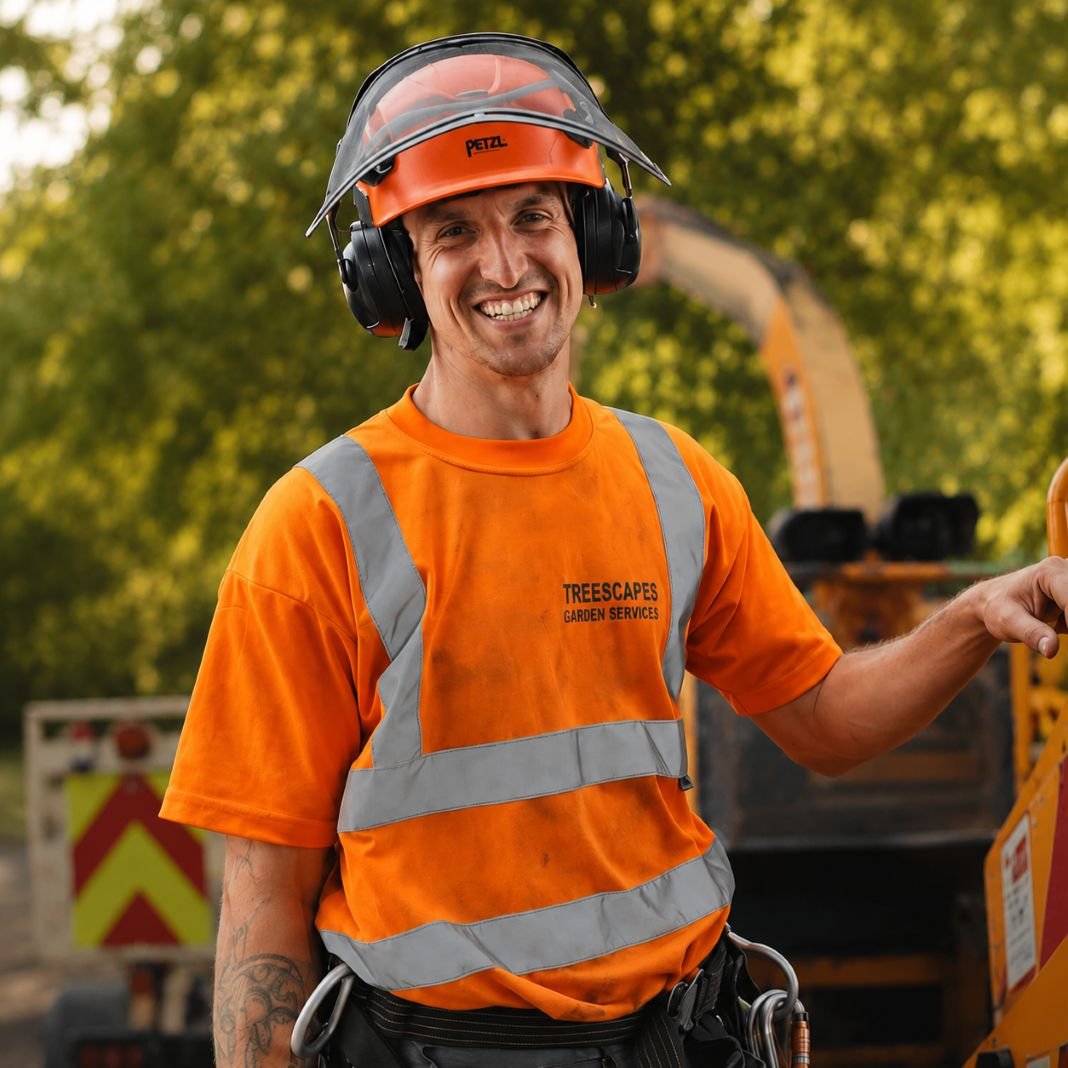
At Treescapes, we start with the tree and the site. Joe, our fully qualified arborist, is on every job, so the decision about cuts is made by someone who understands both the tree and the practical risks around it.
A tidy, controlled crown reduction follows a clear order:
- Assess the tree and surroundings. We look at the tree’s condition, nearby buildings, boundaries, ground access, and anything overhead that could affect the work.
- Plan the pruning points. Cuts are made back to suitable branch points, not guessed in a straight line across the top.
- Use the right access and kit. Larger limbs, climbing, chainsaw work, and trees near buildings, roads, or services are jobs for trained people with proper equipment.
- Manage branches as they come down. Waste is part of the job from the start, so branches are handled in a way that protects the garden.
- Check the finished crown. Before leaving, we check the outline, clear the work area, and remove the agreed waste.
Homeowners often worry about mess as much as the cut itself. That is fair. A crown reduction creates branches, chip, and logs, so tidy handling needs to be built into the job rather than treated as an afterthought.
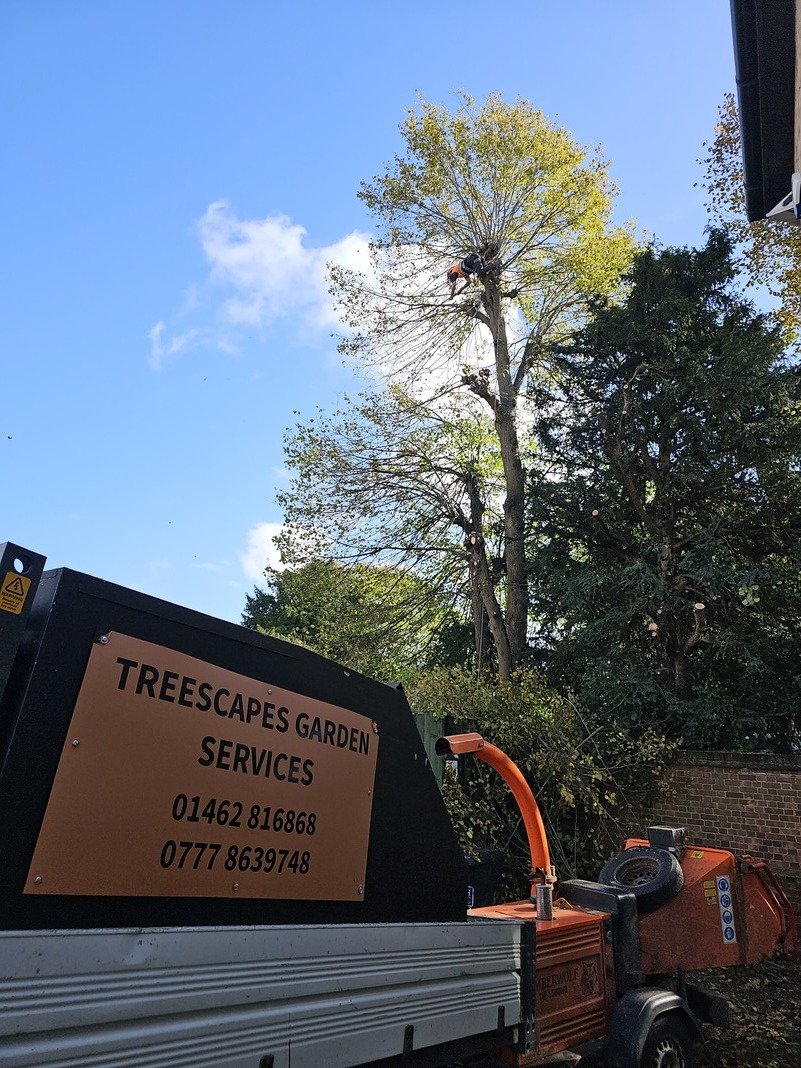
If a tree keeps needing heavy reduction, the space may be too tight for it, so a lighter pruning plan or a replacement tree may be the better long term answer.

Long-term fit beats repeated heavy cuts
A crown reduction can keep a mature tree manageable, but repeated heavy cutting is a sign that the tree and the space may no longer fit each other. Older gardens around Henlow, Shefford, Stotfold, and nearby villages often have trees close to roofs, drives, paths, and boundaries, so the right answer may be reduction, thinning, lifting, routine pruning, or planting something that will suit the space better.
Timing also affects the decision. Tree size reduction is commonly carried out in winter when the tree is dormant, or in late summer depending on the tree, and the RHS classifies this kind of work as moderate to difficult. We use that timing as part of the judgement, along with the tree’s condition and your reason for reducing it.
Local checks stay simple
Permissions need checking before work starts because protected trees and conservation areas can affect pruning as well as felling. GOV.UK guidance says you usually need consent from the local planning authority before work on a tree covered by a Tree Preservation Order, unless an exception applies.
For many trees in conservation areas, a section 211 notice is used before certain work, and GOV.UK gives the notice period as 6 weeks unless an exception applies. North Hertfordshire Council and Central Bedfordshire Council handle their own areas, so we check the right council route for the garden in front of us. Wildlife can also affect timing, especially where bats or nesting birds are present.
Treescapes Garden Services is a family-run team based in Lower Stondon near Henlow, working across North Hertfordshire and Central Bedfordshire. Our view is simple: if a healthy tree can be kept in good shape, that is usually the better result than cutting hard now and dealing with rough regrowth later.
Over the next 12 to 24 months, earlier, lighter tree management will matter more than repeated heavy cuts, because trees keep growing and late pruning gives them fewer good recovery options.
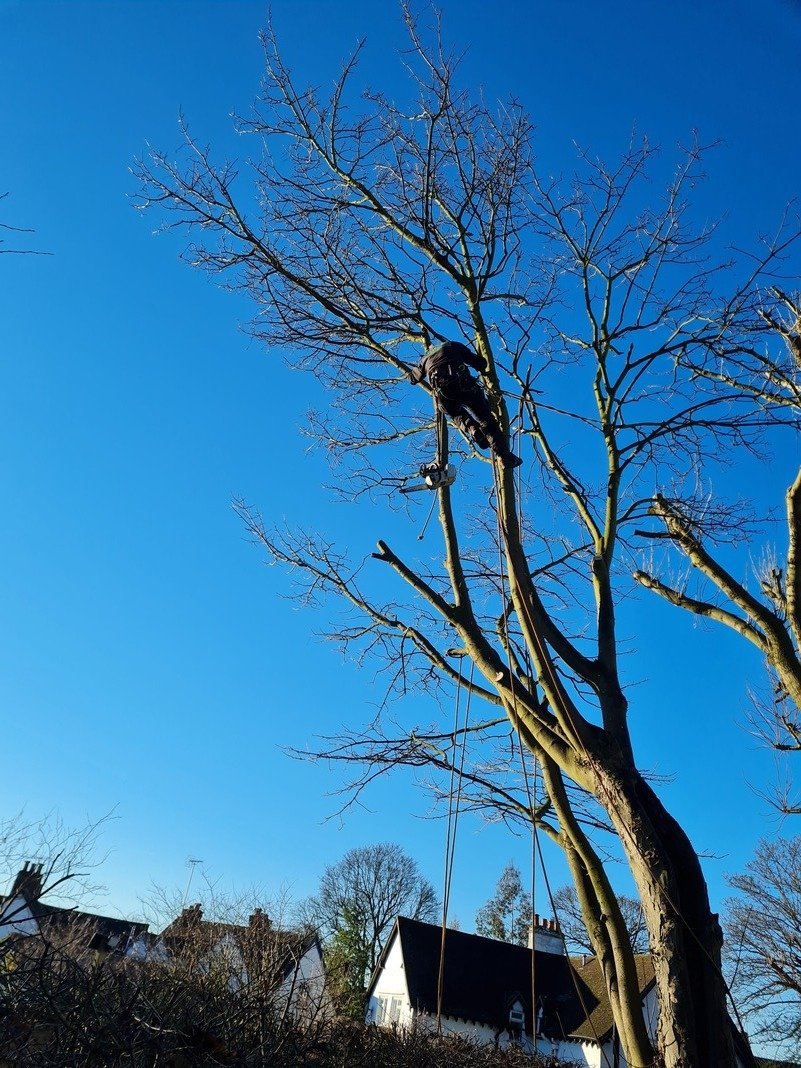
Tell us what you need and we will give you a free, no-obligation quote, usually within 24 hours.
Request a QuoteQuestions we get asked about crown reduction
Will crown reduction make my garden lighter?
Crown reduction can let more light into a garden if the tree’s height or spread is the main cause of shade. If you mainly need light through the canopy, crown thinning may be the better choice.
Will my tree grow back after crown reduction?
A tree will keep growing after crown reduction if it is healthy enough to recover. The aim is to guide future growth, not stop growth altogether.
Can crown reduction help with branches over a neighbour’s garden?
Crown reduction can help where overhanging branches are part of a wider height or spread problem. We still need to look at the branch structure and any permissions before deciding what can be cut.
Can I reduce a tree crown myself?
Small, low garden pruning is different from crown reduction on a mature tree. If the work involves height, large limbs, ladders, a chainsaw, buildings, boundaries, or services, it is a professional tree surgery job.
Does crown reduction cost more if access is awkward?
Access affects the work because it changes how branches are reached, lowered, removed, and cleared. A tree at the back of a tight garden will be assessed differently from one with clear access.
This is general information, not professional advice.





