How do you choose a tree surgeon you can trust?
Choose a tree surgeon who can show qualifications, insurance, a written quote, permission checks, and a clear plan for waste and clean-up. We look for proof you can check before work starts, plus sound judgement on whether pruning, crown reduction, thinning, lifting, or removal is the right answer.
Trust in tree work starts before anyone unloads a saw. Confident talk is easy. Practical proof is what tells you whether the person in your garden can do the work safely, leave the place tidy, and charge the price you agreed.
A cheap quote can look attractive until you realise it does not say who removes the branches, whether stump grinding is included, or what happens if access is awkward. Good advice also means saving or pruning a tree where that is the better choice. The same checks apply if the job includes hedge trimming, garden clearance, fencing preparation, turfing, seeding, or wider garden work, because access, mess, and waste still matter.
Proof should be easy to check before anyone starts work
A trustworthy tree surgeon should not mind being asked for proof. If someone is qualified, insured, and used to safe working, they can explain the basics without making you feel awkward for asking.
Qualifications should be easy to explain
Tree surgeon qualifications matter because the work uses dangerous tools around homes, gardens, boundaries, sheds, greenhouses, and sometimes public paths. NPTC and Lantra Awards certificates show assessed competence for chainsaw use and other arboricultural equipment, which is a plain way of saying someone has been tested for the tools they are using.
A qualified arborist can also explain the choice of work in normal language. You should hear why tree pruning is enough, why crown reduction is better, or why crown thinning and lifting will solve the issue without taking away more growth than needed.
Insurance should be shown, not assumed
Insurance is a practical safeguard for you, your property, and the people doing the work. The Arboricultural Association says a reputable arborist should provide evidence of public liability and employers’ liability insurance, with recommended minimum cover of £5 million.
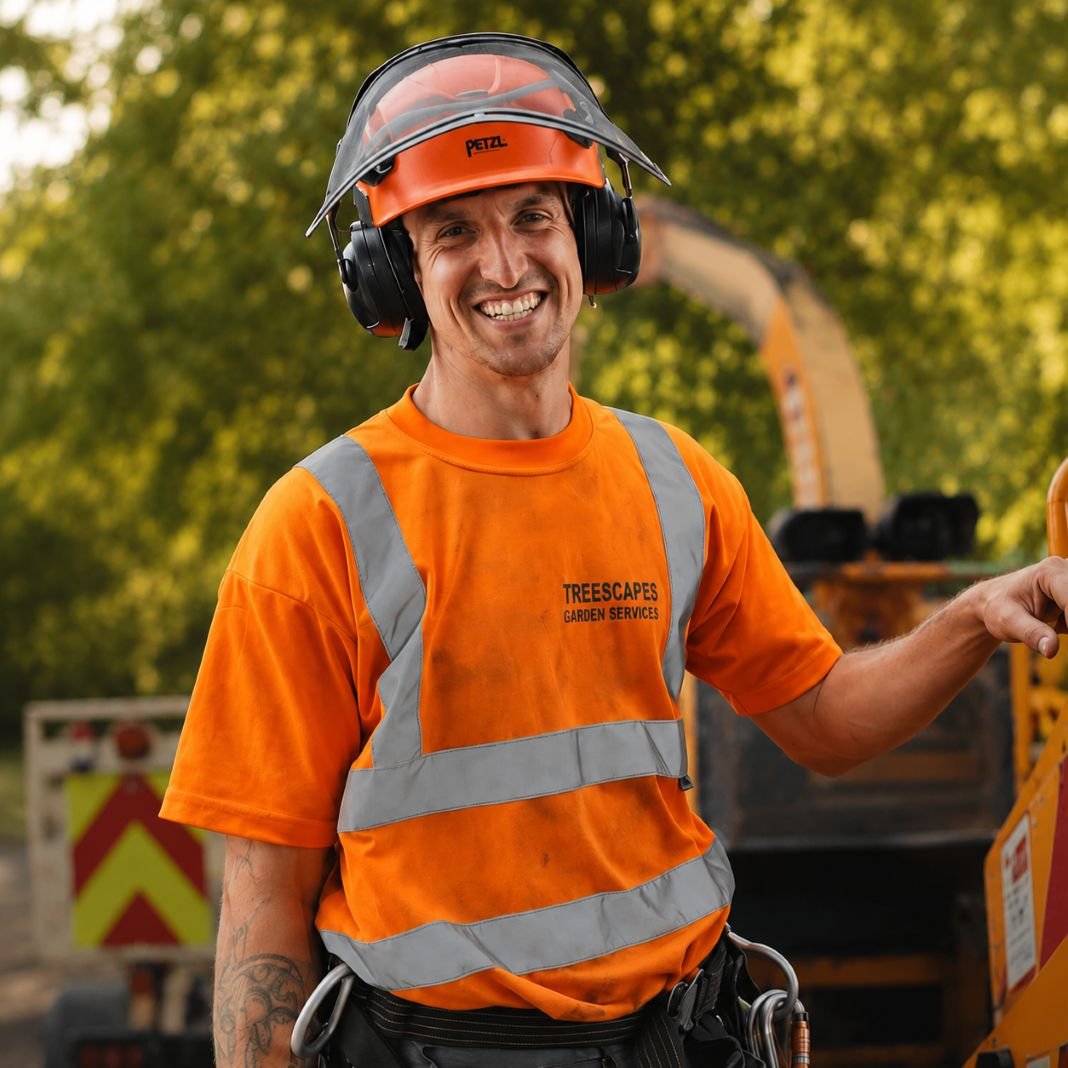
At Treescapes, we keep this simple: Joe is a fully qualified arborist and is on every job, and proof of insurance is part of how we show that the work is being handled properly. Reviews can help you judge reliability, but they do not replace qualifications, insurance, and a clear work plan.
Work standards help protect the tree
BS3998:2010, Tree Work, Recommendations, is the recognised standard named in Arboricultural Association guidance for tree work. You do not need to know the document, but you do want a tree surgeon who works to a proper standard, especially where pruning cuts, crown shape, or long-term tree health are involved.
Poor cutting can leave you with a tree that still causes the same problem, or one that has been reduced far more than needed. Ask for the plain reason behind the method being suggested, because good tree surgery is as much about judgement as tools.
We are a family-run team covering North Hertfordshire and Central Bedfordshire. Ask us for a free quote.
Get a Free QuoteA written tree work quote should name the awkward details
Two quotes can look similar until one includes waste removal, stump work, and clean-up, and the other simply says “remove tree”. A written tree work quote protects both sides because it says what is included before the job starts.
The Arboricultural Association advises homeowners to ask for a written quotation and to reject a contractor who will not provide one. In our view, the quote should be clear enough that you can read it later and know exactly what will happen in your garden.
Ask these questions before you book:
- What exact work is included? Ask whether the job is tree pruning, crown reduction, crown thinning and lifting, felling, stump grinding, hedge trimming, or garden clearance.
- What happens to the timber and brushwood? Branches, logs, hedge cuttings, and chipped material should be dealt with in the agreed way.
- Are stumps included? Stump grinding is a separate part of the work unless the quote clearly includes it.
- Who checks permissions? The quote should say who is responsible for checking whether a Tree Preservation Order or local planning authority consent affects the work.
- How will the garden be protected? Access, gates, lawns, beds, driveways, and nearby structures should be discussed before the team arrives.
- What does clean-up mean here? A clear answer avoids the common problem of one person expecting a tidy finish and the other thinking the job ended when the cutting stopped.
Written scope does not need to be full of trade terms. Plain wording is better if it tells you what will be cut, what will be left, and what will be taken away.
Ask each contractor to name what happens to the waste, because a vague quote often becomes the source of extra cost or confusion later.
Permissions, waste and clean-up belong in the plan
When a tree is mature, close to a boundary, or in an older garden, permission and waste questions should be settled early. Handled clearly, they are normal parts of the job, not problems left for you after the work.
Tree Preservation Orders matter because anyone wanting to cut down, top, lop, or uproot a protected tree in England must apply to the local planning authority for consent unless an exception applies. Conservation areas can also affect what work can be done, so the right check depends on whether your property falls under North Hertfordshire Council, Central Bedfordshire Council, or another local planning authority.
Treescapes Garden Services is a family-run tree surgery and garden services team based in Lower Stondon near Henlow, working across North Hertfordshire and Central Bedfordshire. That local split matters in practice because a garden in Baldock and a garden near Shefford may sit under different councils, even if the tree work looks similar.
Waste needs the same plain treatment. Branches, logs, hedge cuttings, and garden clearance waste should be named in the quote, along with whether material is removed, chipped, stacked, or left for your own use. We are licensed to carry waste, and waste rules are changing in England, with Defra and the Environment Agency saying the current waste carrier registration system will move to a permit-based system in 2027.
Clean-up should be agreed before work starts. If you expect paths cleared, lawn areas raked, or timber stacked in a certain place, say so during the quote visit so the job is priced and planned around that finish.
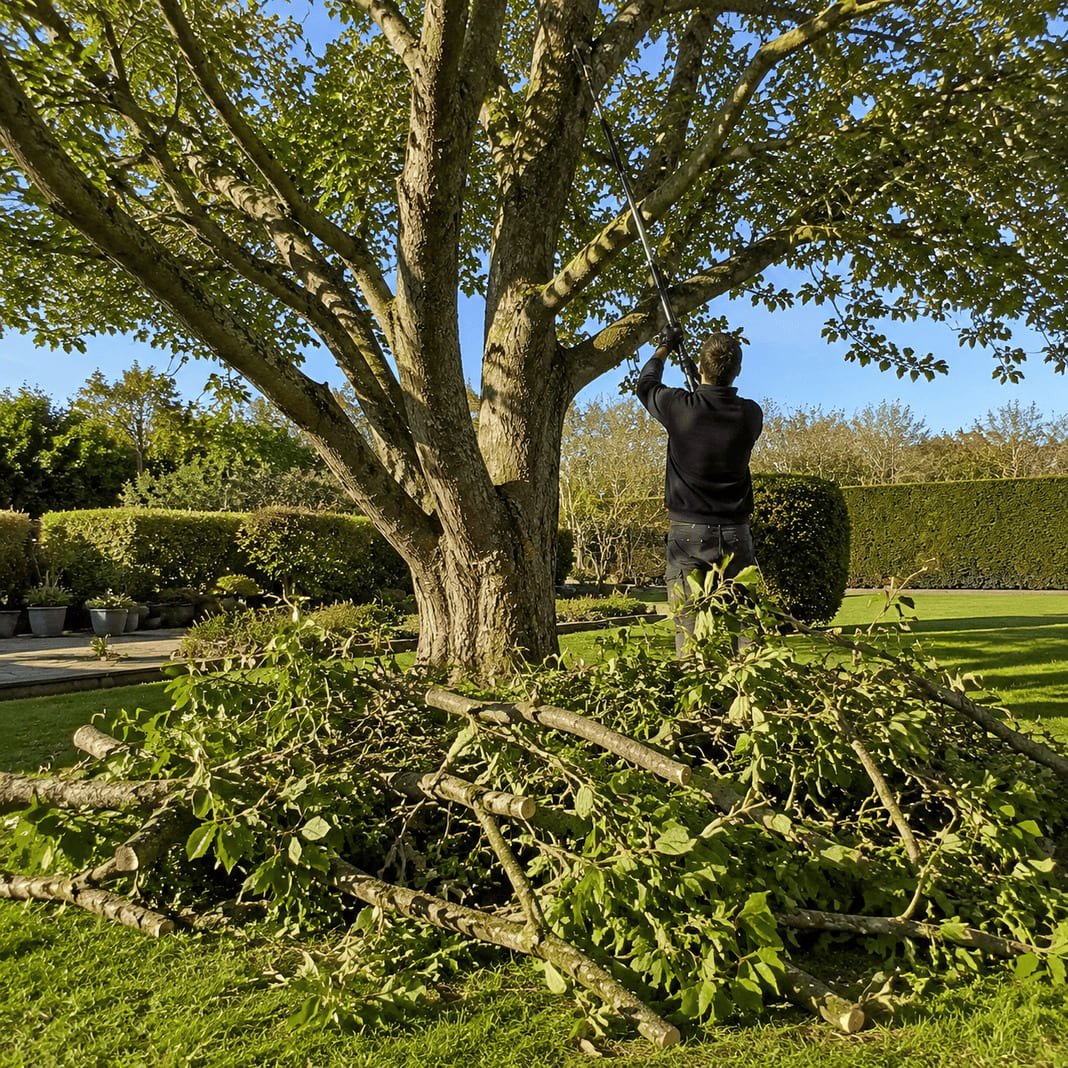
If a tree is close to a boundary or in an older garden, check who will confirm permissions before you agree the work, because that detail can change the whole plan.
Trust shows in the way the job is judged
What does trust look like in the garden? The clearest sign is a person who explains the work, shows the proof, and does not push the biggest job as the first answer.
Watch for warning signs that make comparison harder:
- A vague quote with no detail on timber, brushwood, stumps, or clean-up.
- No clear proof of insurance or qualifications when you ask.
- Pressure to decide quickly before permissions or access have been checked.
- A plan that jumps straight to felling without explaining pruning, crown reduction, thinning, or lifting.
- Waste removal that is left unclear until the end of the job.
As a family-run team trading for 37 years since 1989, we take a practical view of tree and garden work. The right job might be careful pruning, a hedge brought back into shape, stump grinding after an old removal, or clearance before a new fence or lawn. The point is to match the work to the problem, then write it down clearly.
Once you know what to check, choosing a tree surgeon stops being a guess. You can look past the smooth answer and compare the proof: who is qualified, who is insured, who has written the scope clearly, who has checked permissions, and who has said exactly what happens to the waste before the first cut is made.
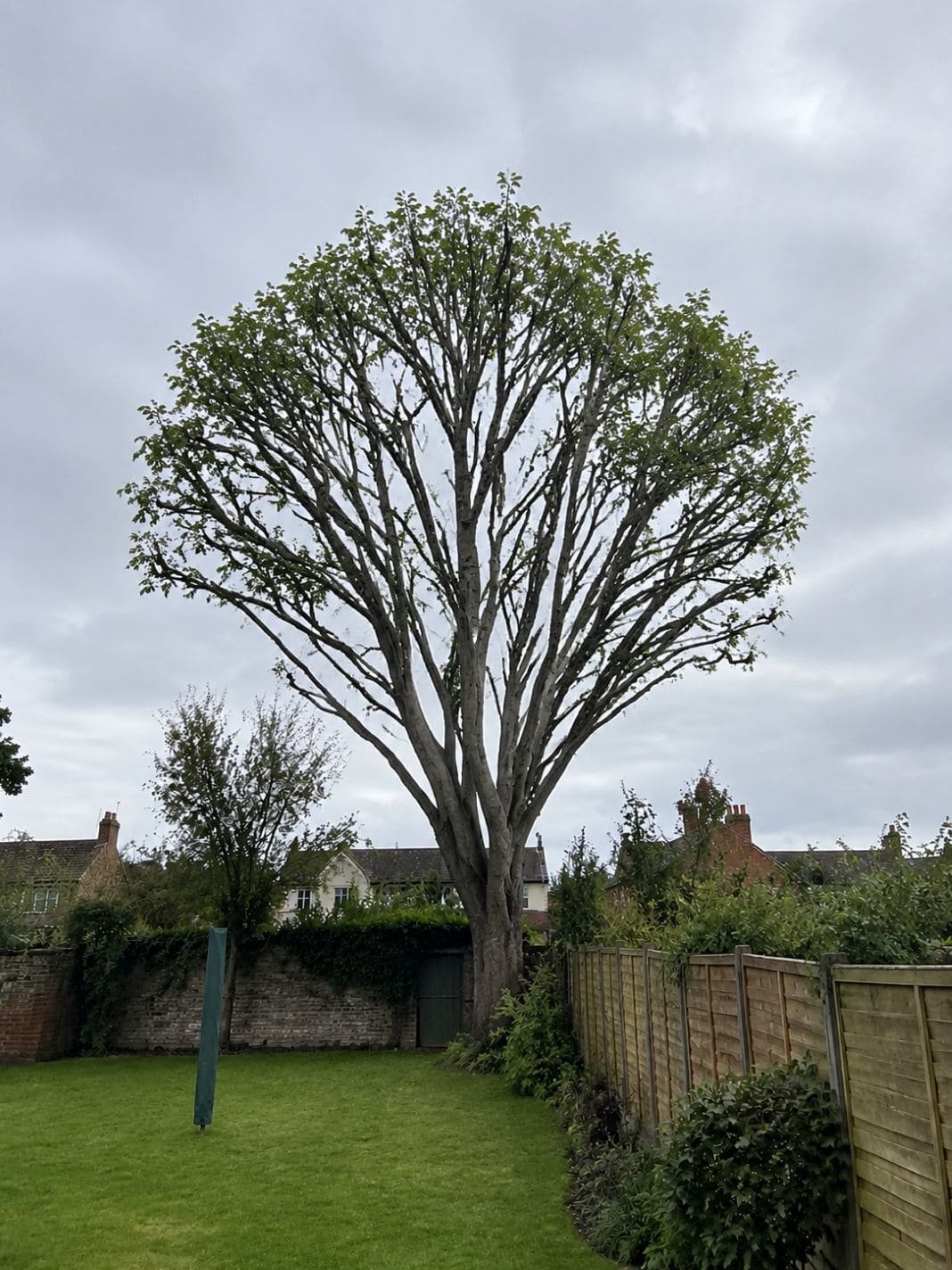
Tell us what you need and we will give you a free, no-obligation quote, usually within 24 hours.
Request a QuoteQuestions we get asked about choosing a tree surgeon
Is an arborist different from a tree surgeon?
An arborist is trained in the care and management of trees, while tree surgeon is the common term many homeowners use for someone who carries out tree work. In practice, you want someone who can show proper qualifications, safe working habits, and sound judgement about the tree.
Are good reviews enough to trust a tree surgeon?
Good reviews help, but they are not enough on their own. You should still ask for proof of insurance, relevant qualifications, a written quote, and a clear plan for waste and clean-up.
Should I choose the cheapest tree surgeon quote?
You should compare what each quote includes before judging the price. A lower price may leave out stump grinding, waste removal, access work, or clean-up, which makes it hard to compare fairly.
Can I do small tree or hedge work myself?
Small, low-risk pruning or light hedge trimming can be suitable for some homeowners if the work is safe from ground level. Work at height, large limbs, chainsaw work, and protected trees are best left to a qualified team.
What if the job includes garden clearance as well as tree work?
The same checks still apply. You need a clear written scope, safe access, agreed waste handling, and a finish that says what will be cleared, stacked, removed, or left in place.
This is general information, not professional advice.