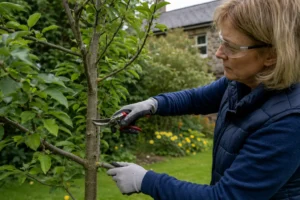
Can you prune a small tree yourself?
Yes, we usually see light pruning as a fair DIY job if you can do it from the ground with hand tools and only remove small growth. Keep the work to dead, damaged or rubbing branches, and stop if height, heavy limbs, a chainsaw or doubts about tree health are involved.
Small tree pruning should feel controlled. You are tidying the tree and helping it keep a sound shape, rather than forcing it into a hard new outline. The Royal Horticultural Society advises working with a tree’s natural habit, which is a useful way to think about the whole job.
We draw the line at simple, ground-level cuts. Once the work turns into crown thinning, crown lifting or crown reduction, you are dealing with tree surgery, even if the tree looks modest from the patio.
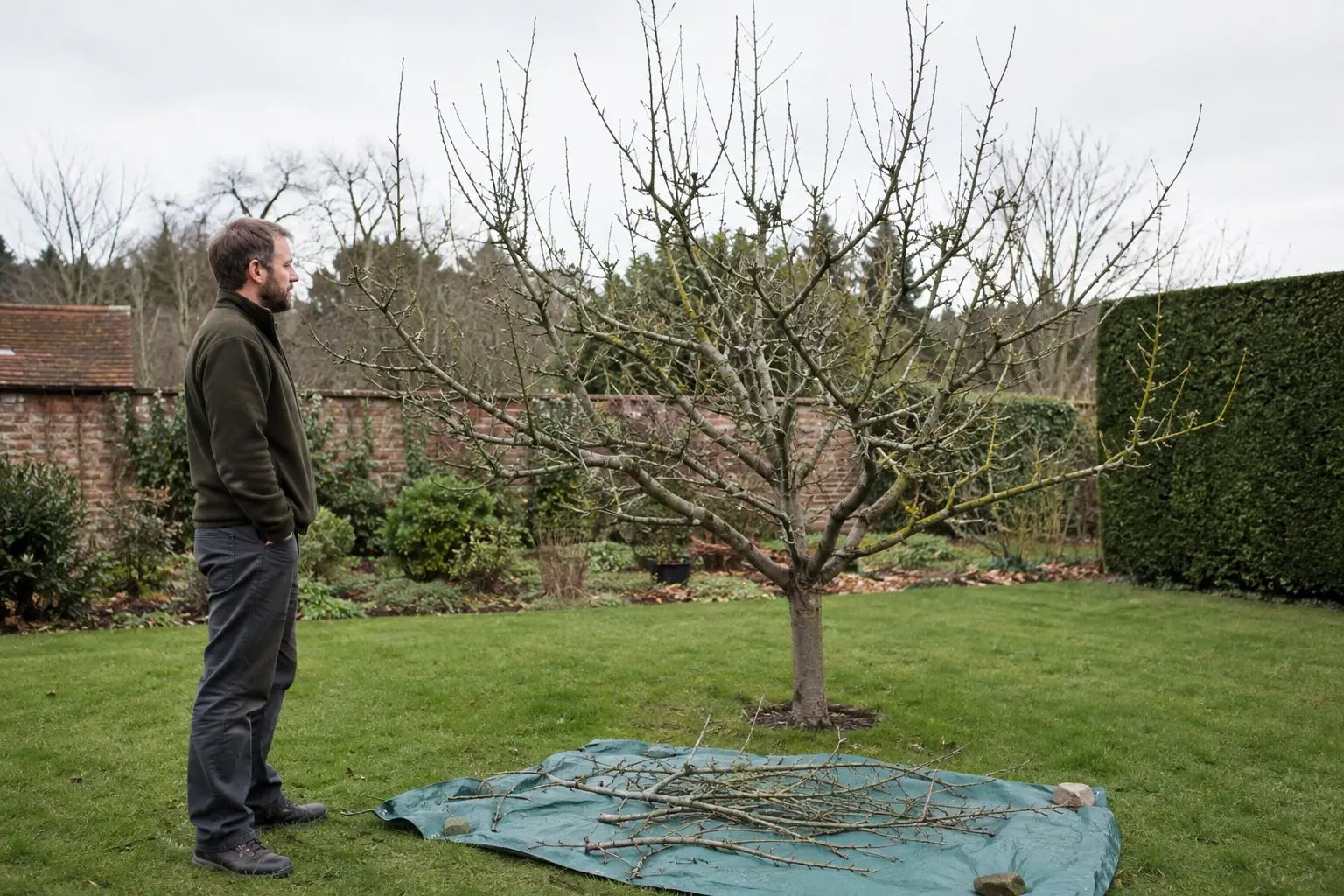
Small means ground-level and light
A small tree is only a DIY job if the work stays within easy reach and every cut stays under control. Height, branch weight and awkward access matter more than the overall size of the tree.
At Treescapes, we give honest advice on this because some small pruning jobs really are fine for a careful homeowner. The safe zone is narrow, though. Use secateurs, loppers or a pruning saw for small branches, wear gloves and eye protection, and keep both feet on the ground.
Use this quick test before you start:
- You can reach the branch without stretching, leaning or using a ladder.
- The branch is small enough to hold steady while you cut it.
- Your aim is limited to dead, damaged, weak or rubbing growth.
- You know what tree you have, or you have checked before choosing the timing.
- No overhead cables, storm damage, heavy limbs or signs of decay are involved.
The Health and Safety Executive treats chainsaw use, falls from height and falling timber as key tree work risks. That is why we keep DIY advice to hand tools from the ground.
We are a family-run team covering North Hertfordshire and Central Bedfordshire. Ask us for a free quote.
Get a Free QuoteTiming changes by tree species
Winter is not always the right pruning time. Many deciduous trees are pruned while dormant, but several common garden trees need different timing, so identify the tree before you cut.
Around Henlow, Shefford, Stotfold and nearby villages, older gardens can have a mix of fruit trees, ornamentals and evergreens. A neat calendar rule can lead you wrong because the tree species matters more than the month on its own. Diseased or damaged wood can be removed when you first notice it, but shaping cuts deserve more care.
Fruit and ornamental trees
Cherry and plum are the ones we would be most careful with in a typical garden. They are pruned from April to July, and they are not treated as simple winter-pruning trees. Silver leaf disease is one reason these trees need a more careful approach, including the limited case where wound paint may be used.
Birch and Japanese maple are best pruned in autumn or early winter. Deciduous magnolia and walnut fit better between mid-summer and early autumn. These details matter because a good cut at the wrong time can still set the tree back.
Evergreens and conifers
Many conifers can be pruned from April to late August, but most will not regrow from old, bare wood. Yew is the main exception. If you cut too far back into brown, leafless growth on many conifers, you may be left with a gap that does not fill.
Non-coniferous evergreens such as holly and bay are best pruned in spring. With evergreen trees, we take a steady approach because a hard cut can leave the tree looking bare for a long time.
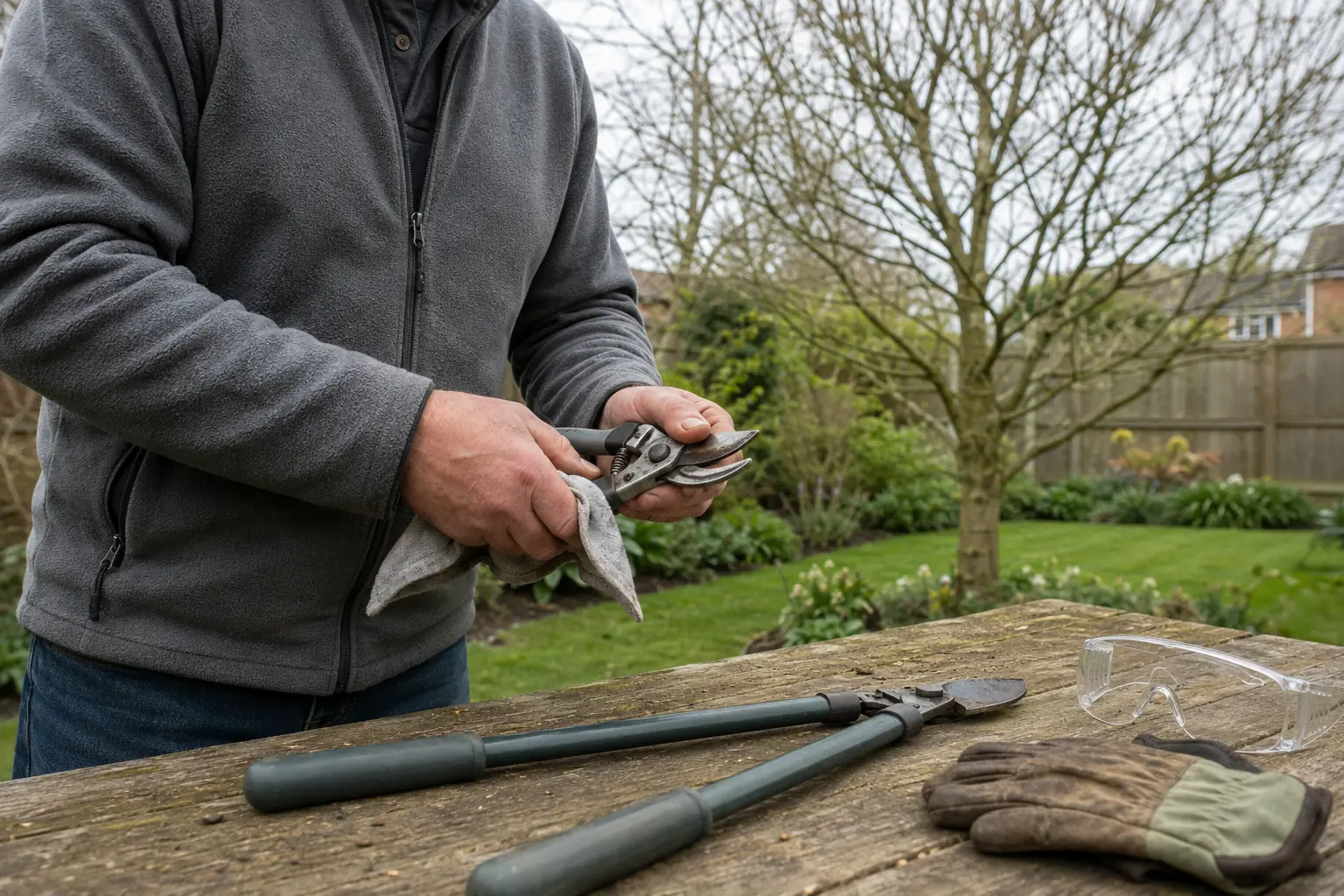
When you prune from the ground, make each cut with a clear reason and stop as soon as the tree keeps its natural shape. That keeps the work light and helps you avoid overcutting.
Good pruning removes less than you think
A small garden tree with a few dead tips and two crossing branches does not need a heavy haircut. It needs a careful tidy, a few clean cuts and plenty of stepping back before you take more off.
Follow this simple order for light pruning from the ground:
- Start by standing back from the tree. Look for the natural shape before you touch it, because the aim is to keep that shape clearer and cleaner.
- Remove dead, diseased and damaged wood first. Then deal with weak growth and branches that rub, because rubbing can open a point where disease gets in.
- Cut small branches in the right place. For branches under 2.5 cm across, the Royal Horticultural Society advises using secateurs or loppers and cutting 0.5 cm above a healthy bud, pair of buds or side shoot.
- Leave the branch collar alone. The branch collar is the slightly swollen area where a branch joins the trunk or a larger branch. Avoid cutting flush to the trunk, and avoid leaving long stubs.
- Pause before removing more canopy. The Royal Horticultural Society advises against taking off more than one fifth of the canopy in one year, because hard pruning can trigger upright regrowth known as watershoots.
- Skip wound paint in most cases. Trees deal with clean cuts in their own way, and sealants are generally unnecessary apart from the limited plum and cherry exception noted above.
Topping is a hard, blunt cut across the upper growth, and it is a poor answer to an untidy small tree. Stop while the tree still looks like itself.
Permission checks come before cutting
Before any cutting, check whether the tree is protected, whether your garden is in a conservation area, and whether birds are nesting in the tree. These checks apply to pruning, not just felling.
GOV.UK states that a Tree Preservation Order can protect individual trees, groups of trees or woodland, and it controls work such as cutting down, topping, lopping and uprooting without written consent from the local planning authority. If a tree sits in a conservation area, a section 211 notice may be needed before certain work goes ahead, unless an exception applies.
Bird nesting also matters. Under the Wildlife and Countryside Act 1981, damaging or destroying the nest of a wild bird while it is in use or being built is an offence, so check before you prune. In North Hertfordshire and Central Bedfordshire, the exact rule depends on the local planning authority.
If you are unsure whether a branch is dead, diseased or simply dormant, leave it for a qualified arborist to assess. A wrong cut at the wrong time can set the tree back for a season.

Professional pruning starts where control ends
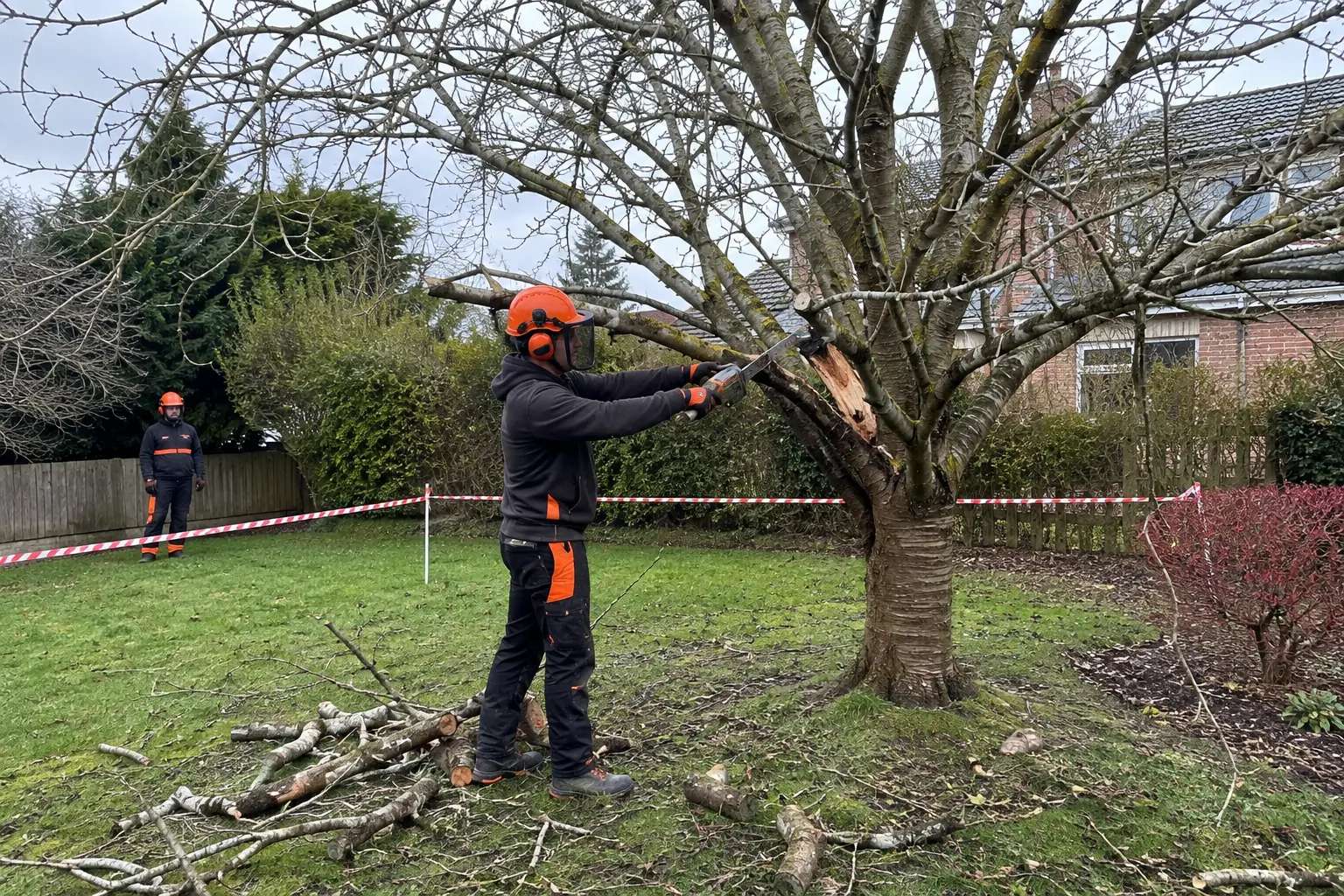
Professional pruning begins when you cannot control the cut, the fall, the tree’s condition or the permission question. Crown thinning, crown lifting and crown reduction need the right judgement as well as the right kit.
Here is the practical split we use when talking this through with homeowners:
| Reasonable DIY pruning | Call a pro |
|---|---|
| Small branches reached from the ground | Any work that needs a ladder, climbing or awkward reaching |
| Secateurs, loppers or a small pruning saw | Chainsaw work or heavy limbs |
| Minor dead, damaged or rubbing growth | Storm damage, decay or a tree that looks unsafe |
| Light shaping that follows the tree’s form | Crown reduction, crown lifting or crown thinning |
| Clear permission status | Tree Preservation Order, conservation area or neighbour ownership doubt |
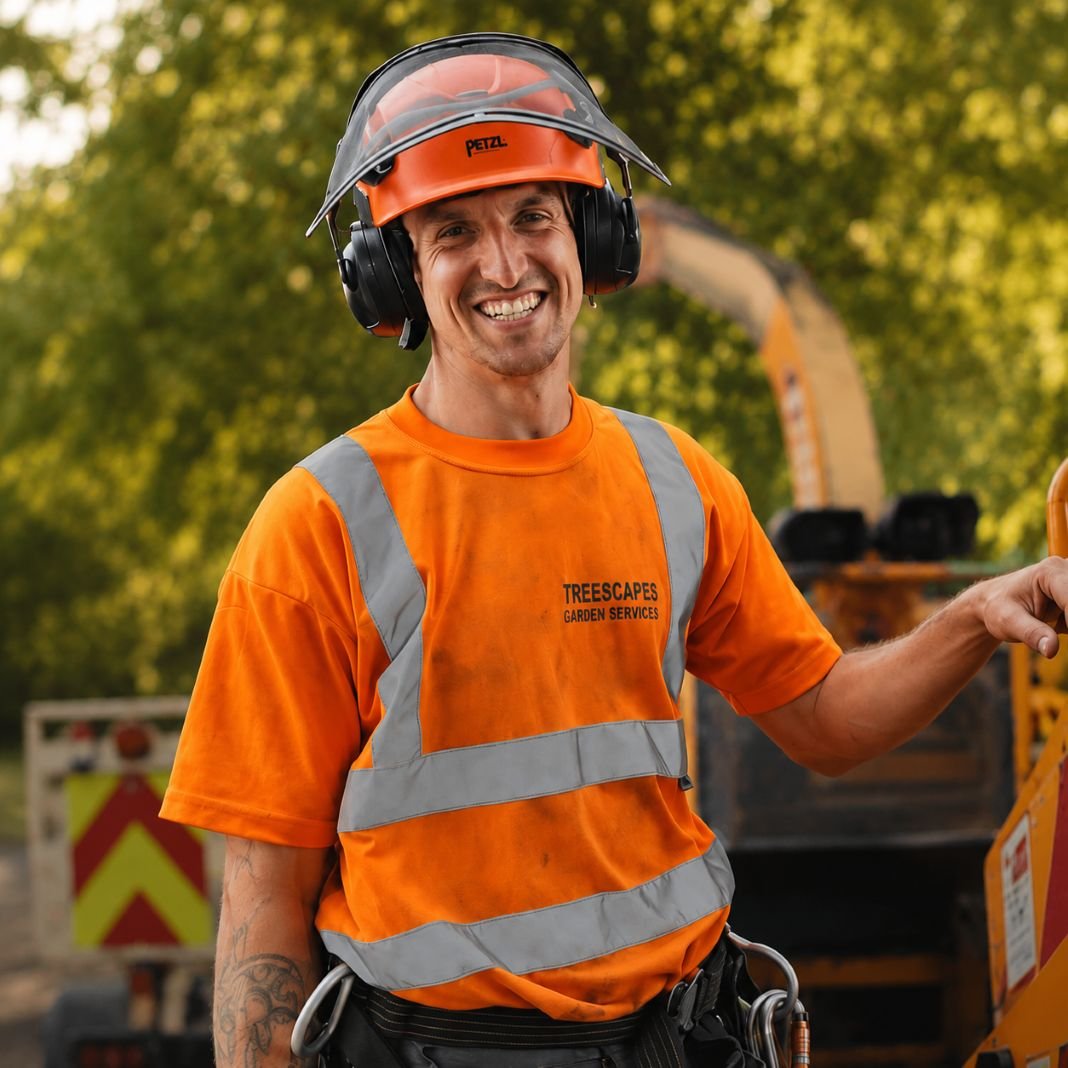
Treescapes is a family-run tree surgery and garden services team based near Henlow, serving North Hertfordshire and Central Bedfordshire. Joe, our fully qualified arborist, is on every job, which matters when a small-looking tree needs a proper assessment rather than guesswork.
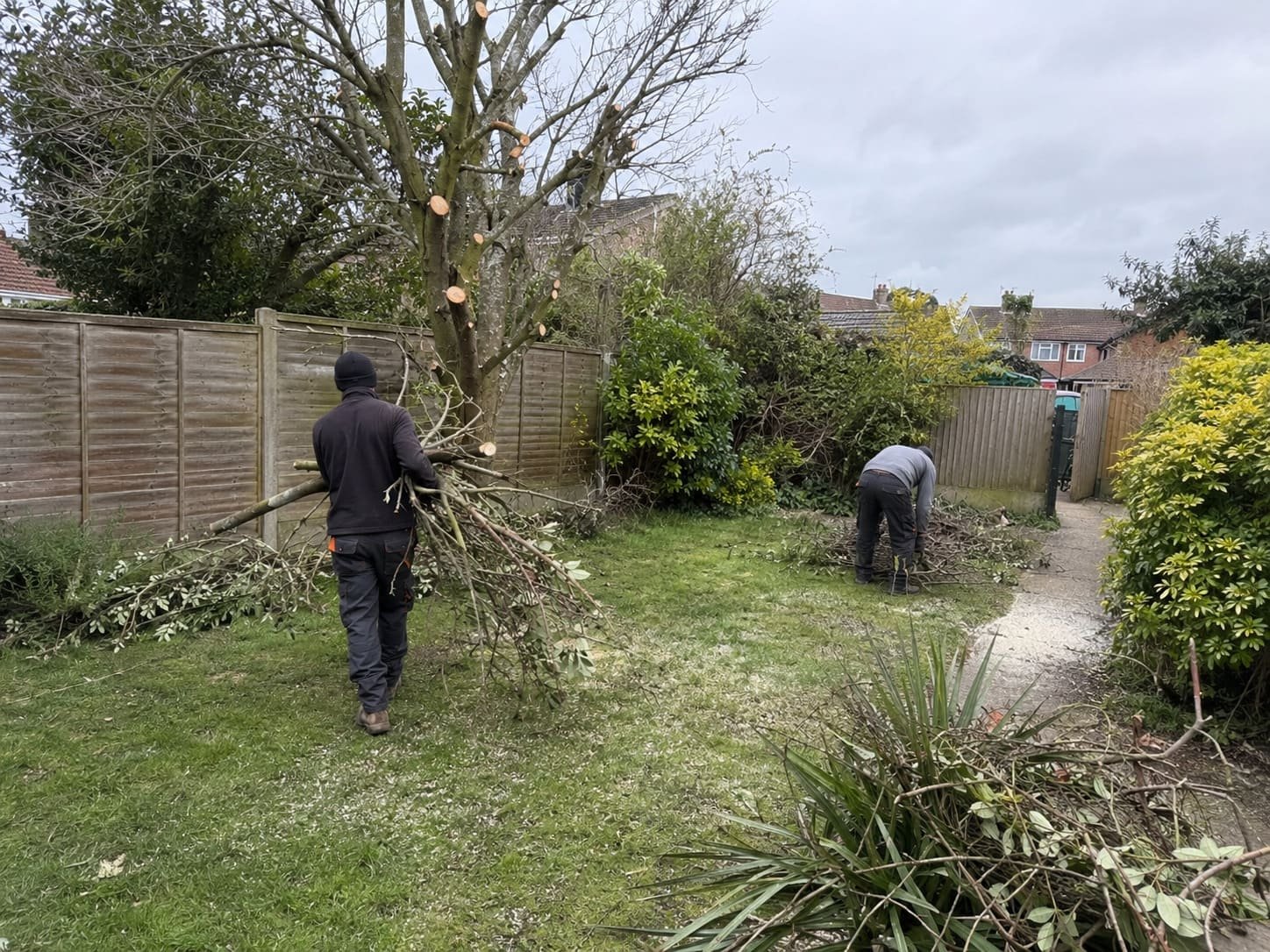
A good professional pruning visit should also deal with the practical bits you care about: safe working, tidy waste removal and a clear price for the agreed work. Once you use that test, the choice stops being guesswork. If you cannot cut it lightly, legally and safely from the ground, it has moved past DIY pruning.
Tell us what you need and we will give you a free, no-obligation quote, usually within 24 hours.
Request a QuoteQuestions we get asked about small tree pruning
Can I prune a neighbour’s overhanging branch?
You need to be careful because ownership and protected tree rules still matter. Keep any cutting within what is lawful on your side, and check for a Tree Preservation Order or conservation area before you remove anything.
Should I prune a young tree?
Light formative pruning can help a young tree build a better future shape. Keep it gentle, remove poor crossing growth early, and avoid taking off more than the tree can comfortably lose.
What happens if I cut too much from one side?
The tree can be left unbalanced in shape and growth. Stop cutting, let the tree recover, and get a qualified arborist to assess it if the shape or safety of the tree now worries you.
Do cherries and plums need different care?
Yes, cherries and plums need more careful timing than many garden trees. They are pruned from April to July, and they are one of the few cases where wound paint may have a limited use.
Will pruning a small tree create a lot of waste?
Light pruning from the ground usually creates manageable waste, but branch volume builds up faster than many homeowners expect. Professional tree work should include clear handling of waste, so you know what will be left tidy at the end.
This is general information, not professional advice.