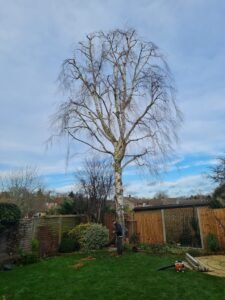
Why should you prune your tree?
We prune a tree when there is a clear reason, such as removing dead or damaged branches, improving shape, reducing shade, creating clearance, or keeping growth in proportion. A healthy tree with no real problem may be better left alone. Good pruning solves a practical issue without taking off too much.
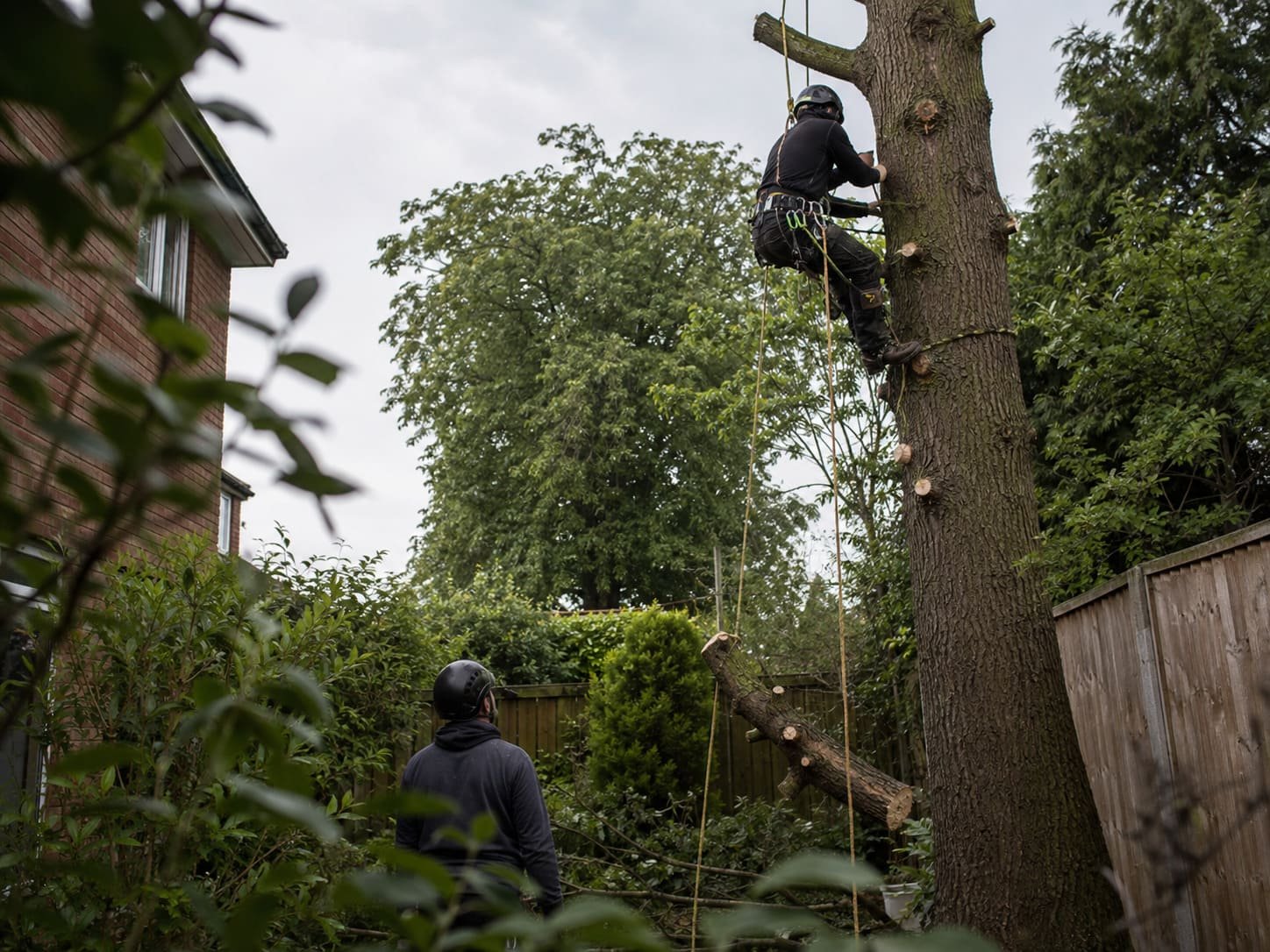
Pruning works best when it has a clear purpose
Pruning is proper tree care when the cut matches the problem. We start with one plain question: what are you trying to fix? A tree that blocks too much light needs a different approach from one with rubbing branches or growth touching a roof.
Well-planned pruning can support tree health, shape the canopy and control size, but that does not mean every large or untidy tree needs cutting. Some garden trees in North Hertfordshire and Central Bedfordshire simply need watching for now. Others need careful work because a branch has failed, the crown has become too dense, or the tree has grown too large for the space.
Cosmetic cutting is where problems start. If the reason is vague, the work is likely to be vague too. We would rather make fewer cuts for a clear reason than take off growth because the tree looks too big at first glance.
Good pruning starts with what the tree needs and what your garden needs from it.
The tree responds to every cut
Every pruning cut asks the tree to respond. A cut removes living material, and the tree then seals off the wound over time. Small, well-placed cuts are easier for a tree to deal with than large cuts made because the crown has been allowed to get out of hand.
Leaves matter because they feed the tree. Heavy pruning removes leaf-bearing material, which can reduce vigour and leave the tree less able to cope with stress. The Royal Horticultural Society advises avoiding removal of more than one fifth of the canopy in any one year, and it warns that hard pruning can trigger strong upright regrowth called watershoots.
That backfire matters if your aim is to make a tree smaller. A hard cutback can create a flush of weak-looking vertical growth, which then needs more work later. Less cutting can do more good than a heavy reduction when the aim is long-term control.
Professional pruning also pays attention to the size of each cut. The Arboricultural Association points to BS 3998:2010 Tree Work, Recommendations, which says the final pruning cut diameter should not exceed one third of the parent branch or stem. You do not need to remember the standard, but it explains why we look for the smallest sound cut that will solve the issue.
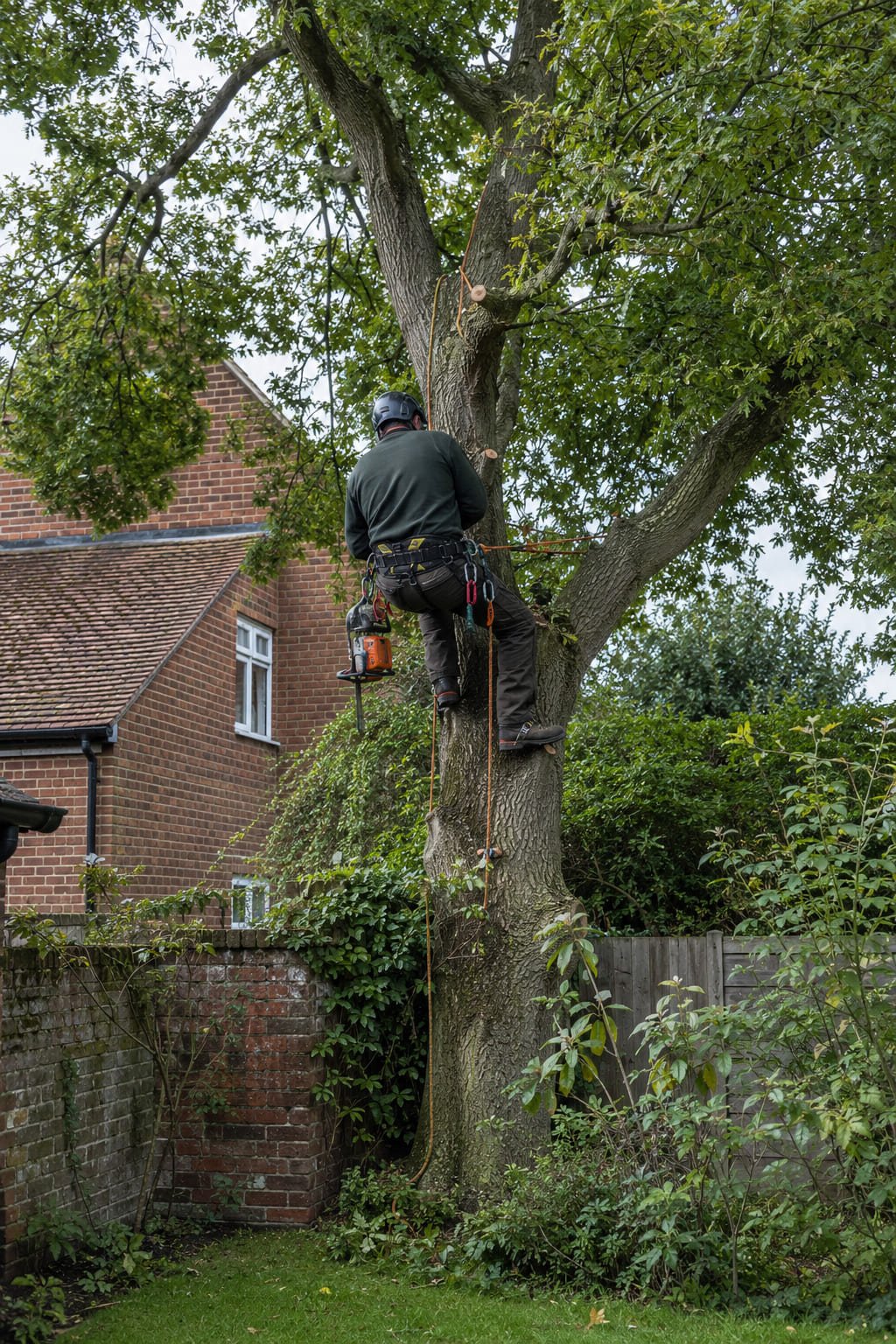
We are a family-run team covering North Hertfordshire and Central Bedfordshire. Ask us for a free quote.
Get a Free QuoteThe main pruning choices solve different problems
Pruning terms get blurred together, and that can lead you to ask for the wrong job. At Treescapes, we start by matching the cut to the problem, because a smaller crown, a lighter canopy and better clearance are different outcomes.
Here is the plain-language difference.
| Term | What it means | When it helps |
|---|---|---|
| Tree pruning | The broad name for selective cutting | Dead, damaged, weak or rubbing branches need removing |
| Crown reduction | Reducing the height or spread in a controlled way | A tree has outgrown its space or needs better proportion |
| Crown thinning | Taking selected branches out of a dense crown | The canopy is too thick, but the overall size can stay close to the same |
| Crown lifting | Removing lower branches to raise the canopy | You need clearance over a path, garden area, drive or building edge |
| Pollarding | A managed pruning system used on some trees | A tree has a suitable history or structure for repeated pollard work |
Topping is the cut to avoid for height control. It usually means cutting across the top of a tree in a blunt way, leaving large wounds and poor structure. If size is the concern, proper crown reduction gives a more controlled answer.
If you are trying to reduce a tree’s size, ask first whether crown reduction or crown thinning better fits the problem. The wrong cut often creates more regrowth and more work later.
The right time depends on the tree and the reason
Ask “when should I prune?” after you know the tree and the aim. A planned shape adjustment, a clearance issue and a damaged branch are not the same job, so they do not always sit neatly in one season.
Many homeowners have heard that winter is the best time to prune trees in the UK. That can be true for some work, but it is too broad as a rule. The Arboricultural Association says pruning should generally happen after the leaves have flushed and hardened, in late spring through summer, with species exceptions.
Those exceptions matter. Birch, walnut and maples can bleed sap if pruned in early spring, so pruning is advised when that risk is low, in summer or midwinter. Prunus species, including cherry, are commonly pruned in summer.
Condition matters too. A tree under stress needs a different judgement from a strong tree needing light shaping. Larger cuts also need more care over timing, because the tree has more to respond to.
Before any planned pruning, we identify the tree, agree the reason and then choose the timing that fits the work.
The safe limit for DIY is smaller than most people think
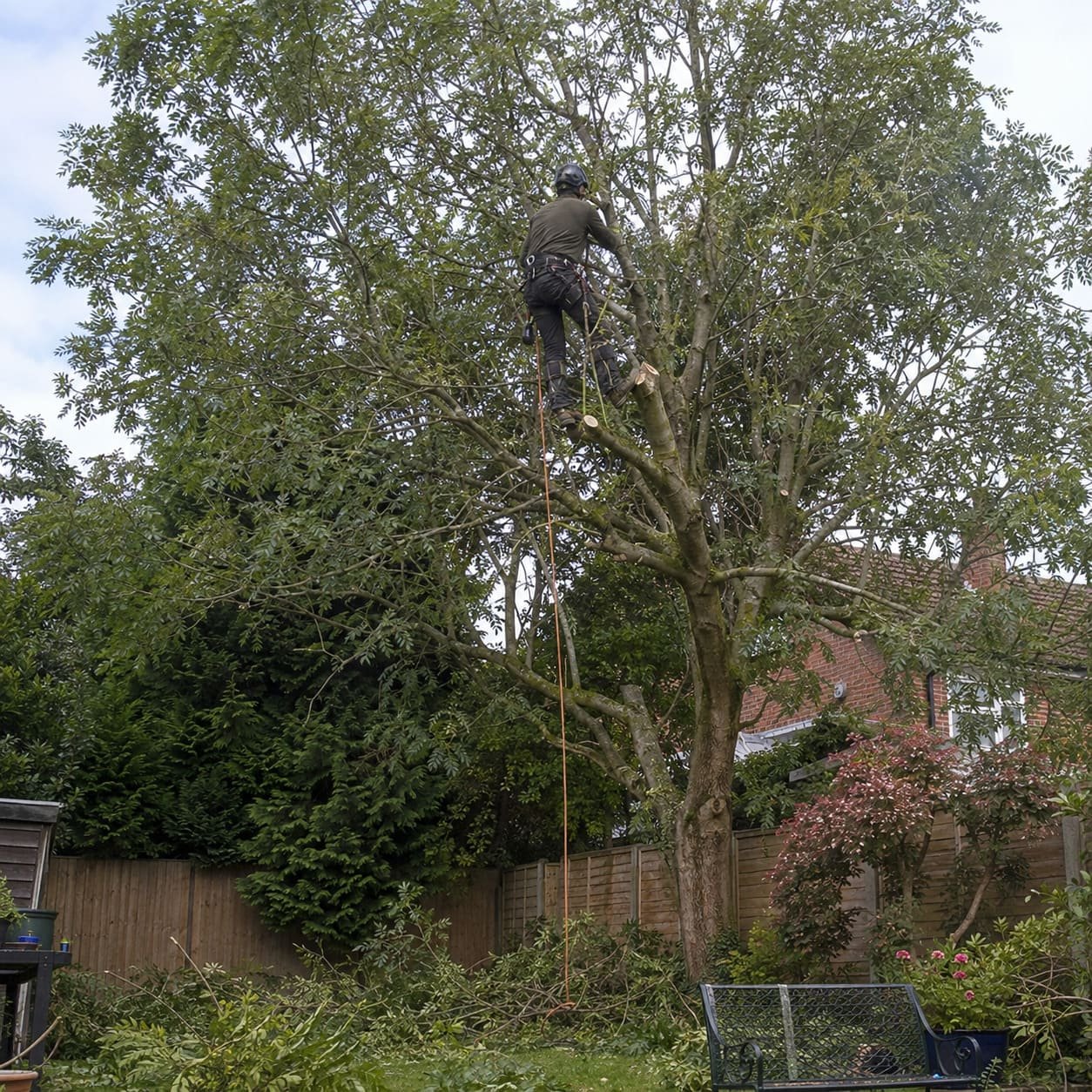
A small low branch that you can reach from the ground is one kind of job. A heavy limb over a shed, a branch above a drive, or anything that needs a ladder is another matter entirely.
The safest DIY boundary is simple: stay on the ground and keep the work light. Branches can twist, drop or split in ways that are hard to judge from below. The Arboricultural Association says removing branches can be dangerous, and if a branch cannot be reached from the ground, the safest option is to use a suitably trained and insured arborist.
Use this quick decision path before you pick up tools:
- Start with reach. If you cannot reach the branch safely from the ground, stop there.
- Look at the branch itself. A small twiggy branch is different from a limb with real weight in it.
- Check what is nearby. Buildings, fences, roads, greenhouses and overhead lines change the risk straight away.
- Think about why you are cutting. Dead, damaged, weak and rubbing branches are sensible priorities to assess, because rubbing branches can create an entry point for disease.
- Plan the clear-up. Waste, access and dragging branches through the garden are part of the job, not an afterthought.
A professional visit should give you clear advice, including whether the tree can stay as it is. We would rather tell you a tree does not need work yet than cut it for the sake of doing something.
A branch that cannot be reached safely from the ground is usually a sign to stop. That simple check removes a lot of avoidable risk before you start pruning.
The local checks are part of good pruning
If your tree is protected or sits in a conservation area, the paperwork matters before any saw comes out. That applies across North Hertfordshire and Central Bedfordshire, but the exact process depends on your council.
A Tree Preservation Order, often shortened to TPO, usually means you need consent from the Local Planning Authority before pruning, lopping or removing the tree, unless an exception applies. GOV.UK also says some tree work in a conservation area may need six weeks’ notice before work starts.
Because we work from Lower Stondon near Henlow into places such as Stotfold and Shefford, we treat council checks as a normal part of responsible pruning. The rule is simple for you as the homeowner: check first, cut after. Wildlife law also sits in the background, so nesting birds and other protected wildlife concerns need calm, sensible checking before work begins.
Proper pruning begins before the first cut.
The better pruning choice lasts longer
One approach is to cut a tree hard because it feels too large. Another is to decide what needs fixing, then make measured cuts that solve that issue with the least harm to the tree. The second approach lasts better because it respects how the tree will respond after the work.
Hard cutting can look decisive on the day, but it often creates strong regrowth and more future pruning. Reason-led pruning is slower to decide, yet it gives a better result for gardens where the tree still has a job to do, such as giving shade, screening a boundary or framing the space without taking over.
At Treescapes, we would rather keep a tree safe, useful and in proportion than cut it harder than it needs. Sometimes that means crown reduction. Sometimes it means thinning, lifting or removing one poor branch. Sometimes the right answer is to leave the tree alone for now.
A quick cutback deals with the size you see today. Careful pruning deals with the tree you will still be living with in the years ahead.
Tell us what you need and we will give you a free, no-obligation quote, usually within 24 hours.
Request a QuoteQuestions we get asked about tree pruning
Can pruning save a tree that looks unhealthy?
Pruning can help if the problem is dead, damaged or rubbing branches, but it cannot fix every unhealthy tree. We look at the tree’s condition first, because a weak tree may need inspection before any cutting is agreed.
How do I know if my tree is too dense?
A dense crown becomes a problem when it blocks too much light, catches wind heavily, or creates poor branch structure. Crown thinning can help in the right case, but taking too much out can weaken the tree.
Can I prune branches that overhang my garden?
Overhanging branches can be a boundary issue, but permissions, tree protection and safe working still matter. We recommend checking ownership, council restrictions and the practical risk before cutting.
Will pruning leave a lot of mess in my garden?
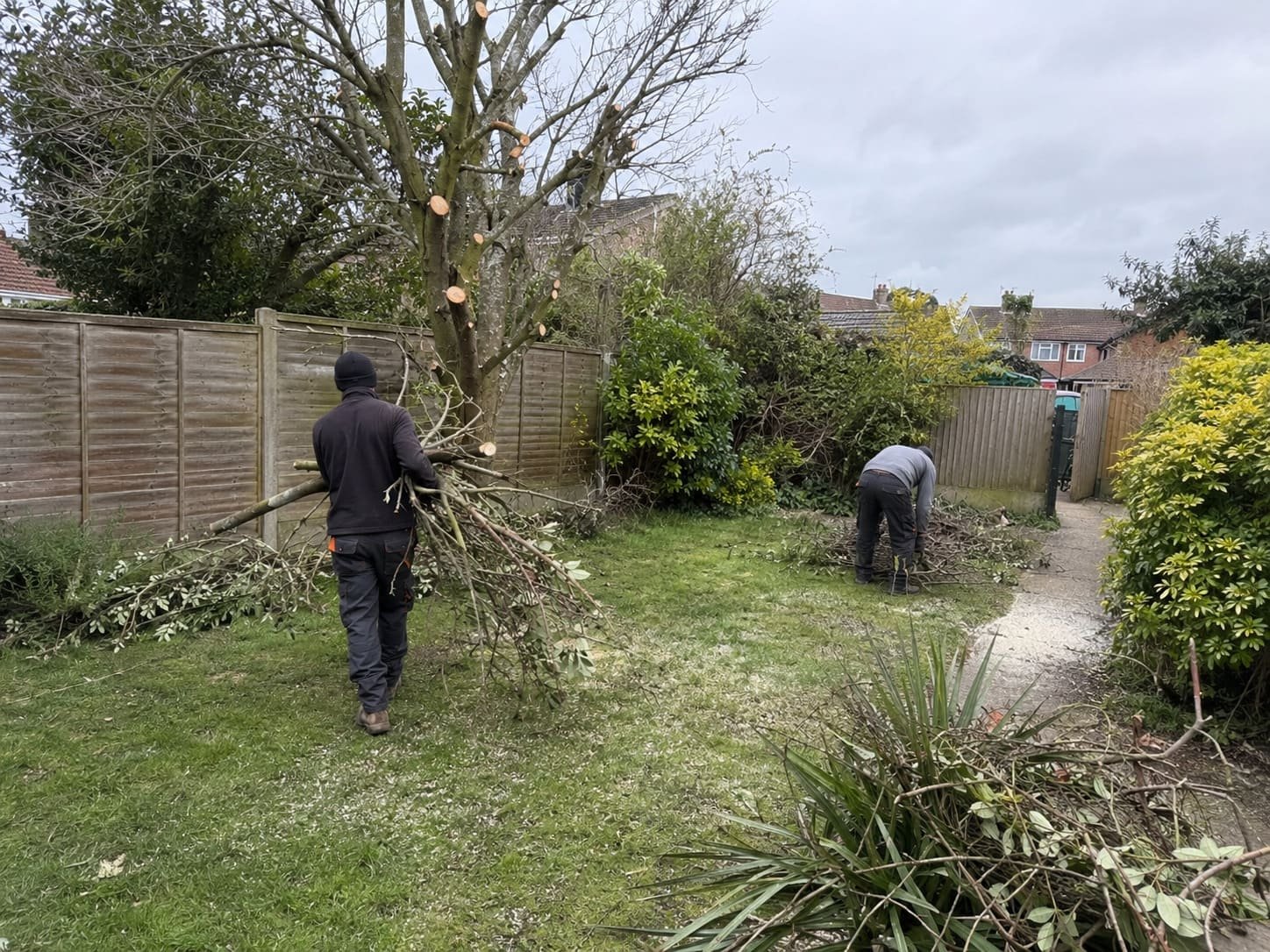
Tree pruning creates branches, twigs and sawdust, so clear-up needs to be planned as part of the job. A proper pruning visit should include safe waste handling and a tidy finish, not leave you dealing with the aftermath.
Is crown reduction the same as making a tree shorter?
Crown reduction can reduce height or spread, but it is controlled work that follows the tree’s branch structure. Simply cutting the top off is topping, and that is not a good shortcut for a garden tree.
This is general information, not professional advice.